

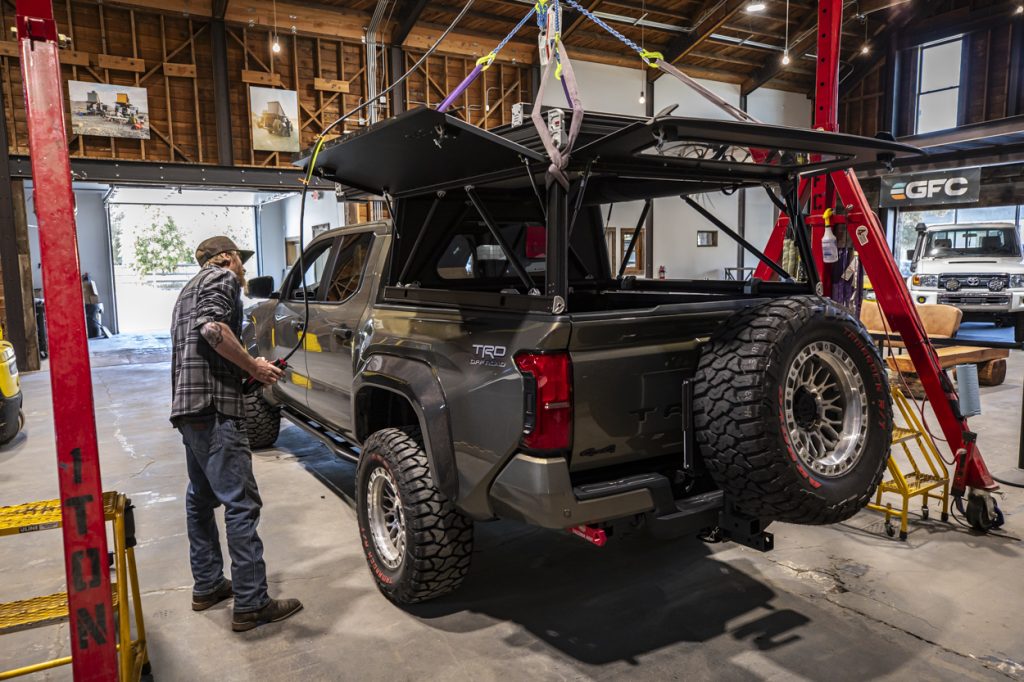
Truck bed campers are usually advertised around their outdoor and camping capabilities. But the fact is, most of us still use our trucks for daily driving. The average camper is designed mainly around its recreational use. And while GFC products certainly excel there, they offer a setup that still works well for everyday life.
With all campers, you have to consider a few factors. Weight, height, wind noise, MPG impacts, and drivability.
The question is, can your Tacoma (or any truck) still feel like a Tacoma while running a camper?
In short, absolutely. And GFC is only one of a few who can say that. In this post, I’ll dive into my experiences and why GFC is one of the companies that makes a product that works really well for how the vast majority of us use our trucks. I’ve had one of these campers on my last two trucks, and have driven well over 50,000 miles with them.
Find Them Online
Table Of Contents
Low Profile Design
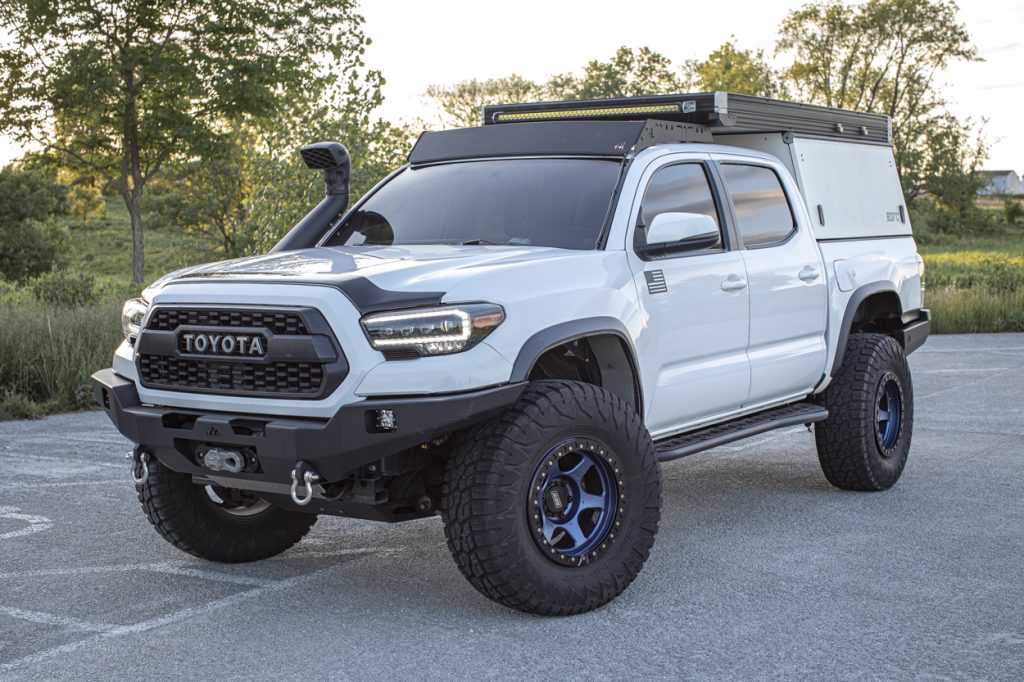
GFC’s design is so low profile, you basically forget it’s there. They’ve trimmed it down to only what’s needed, without handing over the bed sides or sitting way above the cab.
When you first think truck camper, you probably imagine a full sized slide in. That F-150 you pass on the highway and wonder how easily the wind could tip it over. The whole concept behind GFC is the ability to go fast, it’s literally in their name. And to be fast, you need to keep the design as streamlined as possible.
You don’t have to worry about clipping something in a tight parking lot and you (typically) worry less about things like parking garages. With a sleek design, you also experience a lot less wind resistance. The overall size has minimal impacts on MPG and noise. The camper visually flows with the body lines, and stays within their limits.
Weight Matters More Than You Might Think
Modern trucks are able to handle a lot of weight. But just because they can, doesn’t mean they should.
Over time, I’ve learned that excess weight is the enemy. As you build a truck for off-roading, overlanding, and camping, the weight can add up fast. From a daily driver perspective, your truck can start to get sluggish. Poor acceleration, increased braking distance, and worsening fuel efficiency. There’s certainly a balance to be struck, but saving even seemingly small amounts of weight can add up fast.
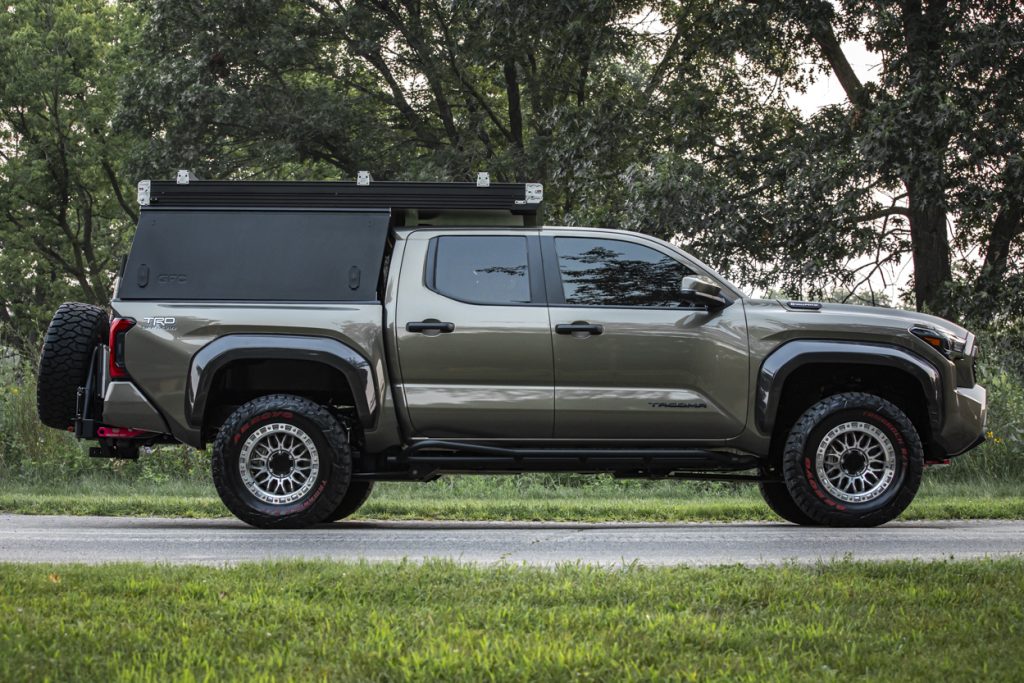
GFC campers are primarily made from aluminum and intentionally made to be as strong and light as possible. They only weigh ~275 lbs. for mid-sized trucks. While that is still a good amount of weight, other alternative frequently hit 350-400+ lbs. and some of the larger versions or slide in units can hit over 1,000 lbs.! That’s no small number. And the more they weigh, the more they impact your pavement performance.
Your Truck Can Still Be Used Like One
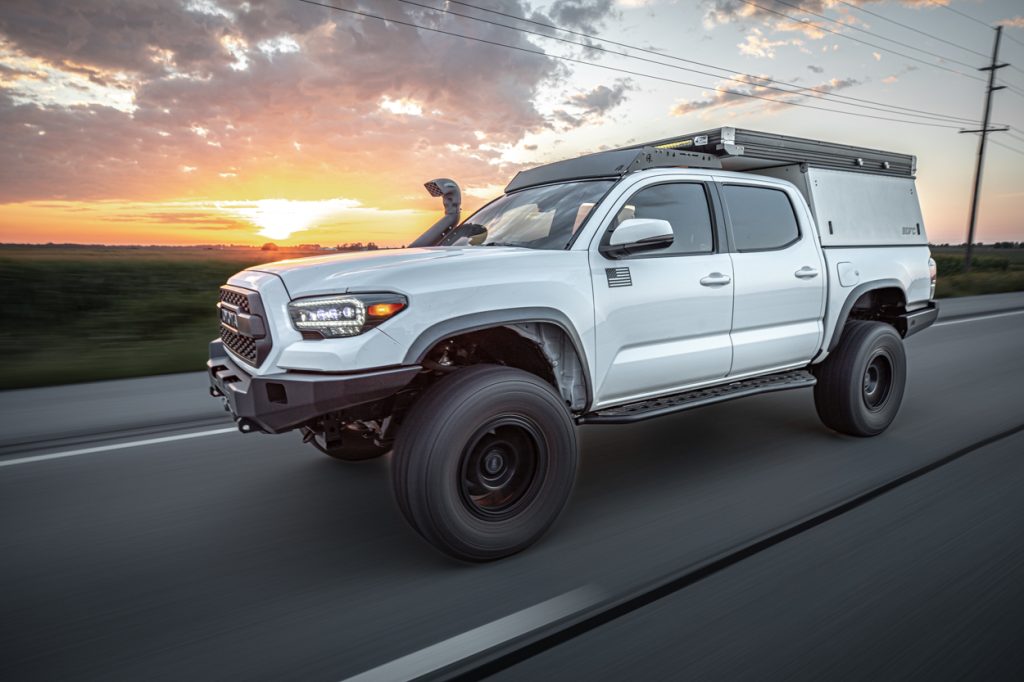
While you naturally lose some vertical space, the GFC still works well for usual truck activities.
You can still make a run to Home Depot to pick up some lumber for a project. The roof is flat and is more than strong enough to handle typical loads. They also offer crossbars. You get side doors and rear hatch access, reaching the bed isn’t an impossible task. You can still easily haul groceries, tools, stuff for work, and really anything that doesn’t exceed the height of the cab. So yeah, you can still help your buddy move that couch next weekend.
The interior is actually taller than the cab is. So you get a few inches of extra space. I’ve been able to carry everything from tile for a bathroom renovation to baseboards that I laid in the bed and passed through the rear hatch opening. And I was still able to fit five 37″ tires on my way to the tire shop to get them mounted. To note, the optional turbo cubby (storage system inside) actually came in clutch on several occasions. I haven’t encountered a situation where it truly interfered in daily use.
Long story short. You lose very little utility and you gain some in other ways.
Quieter & Rattle Free
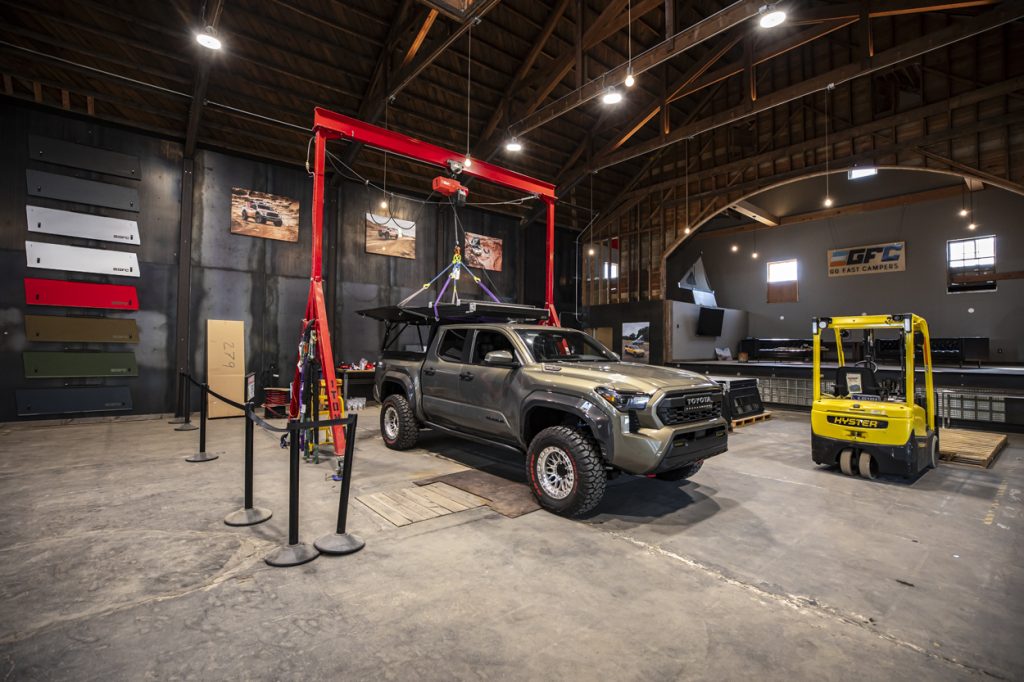
Daily use miles can also reveal a camper’s weak points.
For one, highway and road noise increases as the setups get bigger. A true full size camper absolutely roars when cruising down the highway at 80 mph. With the GFC its not that you get no noise, but significantly less. Relatively speaking.
The lightweight and strong design, along side the robust mounting system, ensures a very secure install. Once properly torqued, its not going anywhere. You don’t experience any shifting after hitting a pothole and the camper itself doesn’t many any noise or rattling that can drive you nuts.
On many occasions, people find that since they use their trucks on road a lot, road manners matter more than trail performance or a larger living area. That’s not to say the GFC isn’t more than adequate there, but more so to state that it excels during regular vehicle use.
Personally, I love the added function and how it looks more than anything. Through all my time with the campers, I’ve never had any real noise complaints.
No Camper Related Regrets
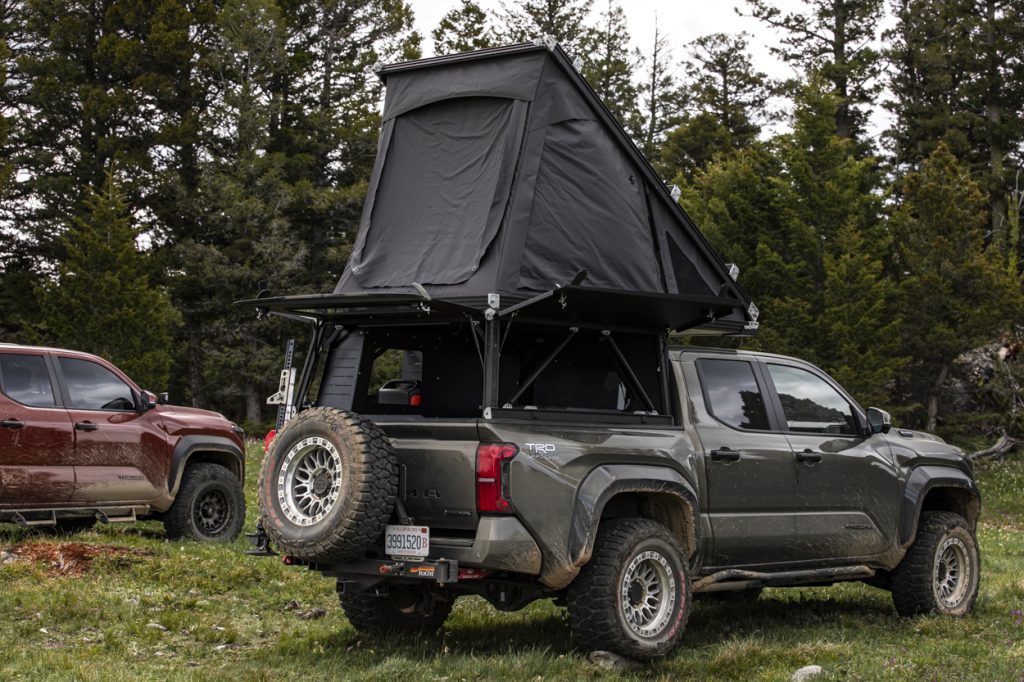
If you get the wrong camper, you might start to question your setup when you’re not going camping, etc.
This might occur as you maneuver through bumper to bumper traffic and your blind spots make it hard to see drivers around you. Or while running errands. Many owners with heavier and more involved setups either have a dedicated trail rig, or they take the slide in units out when they’re not being actively used. Sounds like a lot of extra work.
The GFC is the leave it on full time solution. At then end of the day, it becomes a part of the truck, not a nuisance or a dead weight.
Real World Trade Offs (Keeping It Honest)

While GFC and aftermarket accessory companies continue to expand support, the base campers are not meant to loaded with a million features like larger and more equipped alternatives. This “downside” is actually why you don’t affect daily functionality as much.
Super equipped campers can cost $20K or more. A lot more. So you have to think, will the cost versus long term value actually make sense? Will you get your money’s worth out of a more built alternative? This is a lot of money to spend to learn that it’s not going to work on your commuter rig.
With GFC, you get tent fabric versus hard wall insulation. You get a blank canvas instead of a permanently mounted kitchen. You get a system that setups up fast, gives you a good night’s sleep, and covers all your basic bases. All of these supposed “compromises” are actually what makes this setup more attractive to the daily crowd.
Final Thoughts
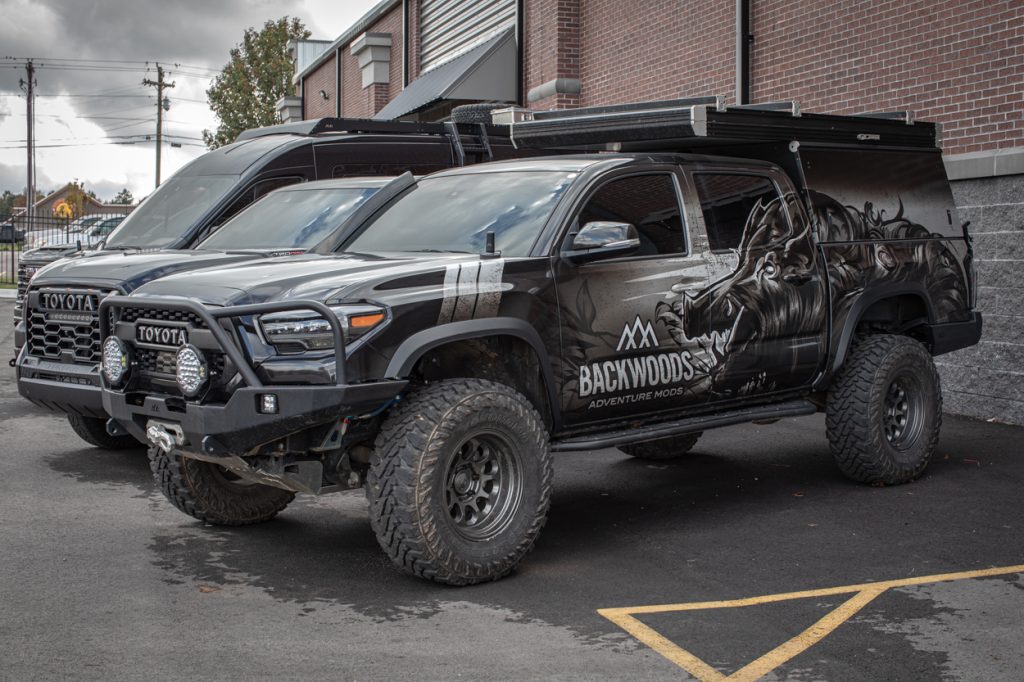
So who is the GFC camper suited best for in this situation?
A Tacoma (truck) owner who…
- drives their vehicle daily
- camps often, but not full time
- needs to retain as much truck function as they can
- wants as little hassle as possible
- refuses to ruin drivability and on-road performance
The final takeaway? It’s not the best camper for everyone. But on the topic of daily driving, its the best camper for those who still need their truck every day.
