

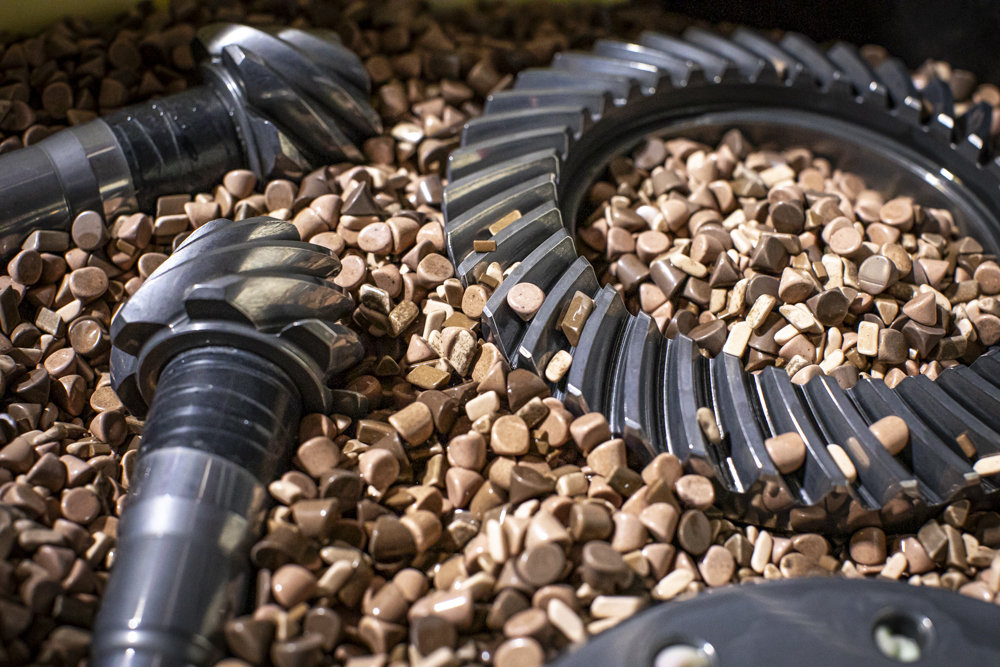
Over the years, I’ve been learning more and more about re-gearing. Re-gearing is when you upgrade your differential gear ratios to restore various performance elements, especially after adding lots of weight and things like bigger tires. I’ve been studying everything from the benefits, to installation. But one thing I wasn’t aware of until more recently, was REM surface finishing.
REM Surface Engineering is a company that develops processes and machines for metal surface finishing. Their ISF (Isotropic Superfinishing) technology focuses on maximizing the performance of metal to metal surfaces used in power transfer. In this case, your truck’s ring and pinion. A vital part of your driveline.
I learned all about this and got to see it in person at the Revolution Gear & Axle facility in Illinois. They have one of these machines and the finish is an optional add-on to any gear package they sell.
So, let’s dive into what goes into it and why you should strongly consider adding it when upgrading your gears.
Table Of Contents
What REM Finishing Is
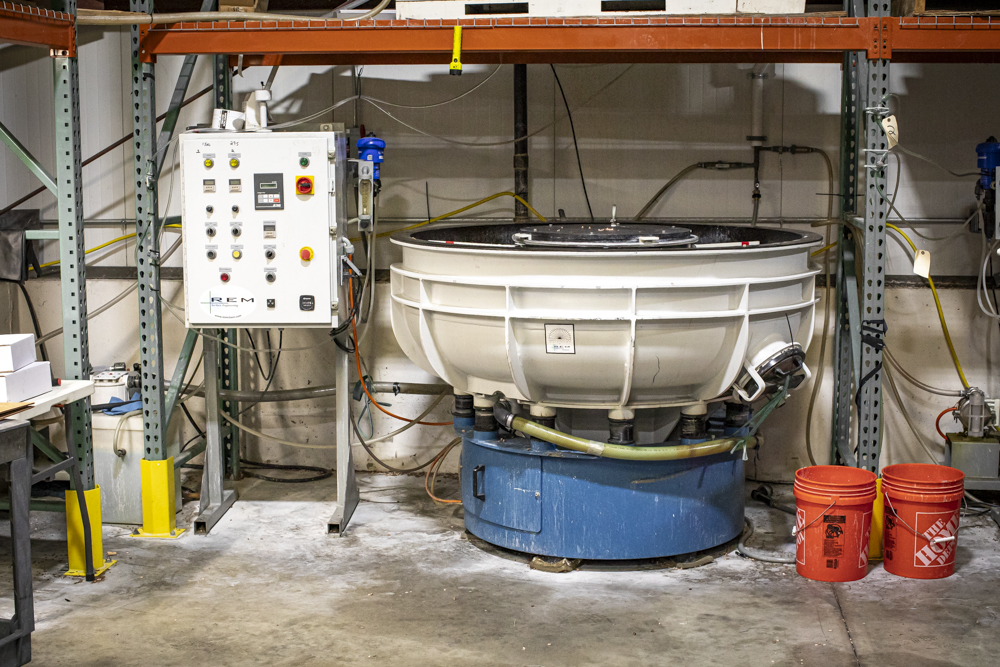
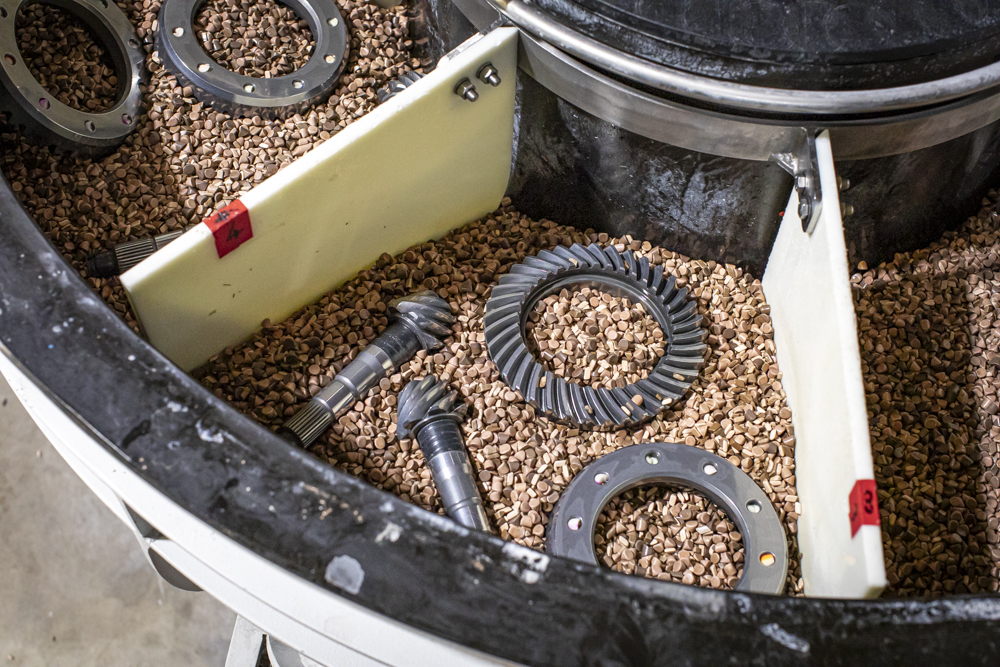
In the image above, you can see Revolution’s REM finishing machine. They do this in house to reduce lead times.
REM finishing is a chemically accelerated surface refinement process used to improve the finish of metal parts. In this case, ring and pinions. It focuses more on removing microscopic surface imperfections left behind by the manufacturing process.
New gear packages, even high quality ones, have marks from machining and tiny high points on the teeth. These irregularities increase friction, generate heat, and contribute to wear. This is especially true during the break-in process. The finishing targets these marks/points, while smoothing the gear tooth surfaces and preserving the valleys that help retain oil lubrication.
Simply put, the process works by using a special chemical compound that reacts with the metal to soften it on a microscopic level. Then, the gears are placed in a vibratory environment with a non-abrasive media (the small piece seen in first photo). This gently removes the imperfections. This creates a uniform, isotropic (consistent in all directions) finish.
It’s important to note that this does not alter geometry, tooth profile, or tolerances. You will still need to properly install them, with appropriate backlash and contact patterns (aka make sure you pick an experienced shop). This is a refining step, not a fix for bad manufacturing or improper install.
To keep it short, REM finishing optimizes surface conditions, reducing friction and improving consistency without changing how it is meant to function.
What Gear Surfaces Look Like Before & After
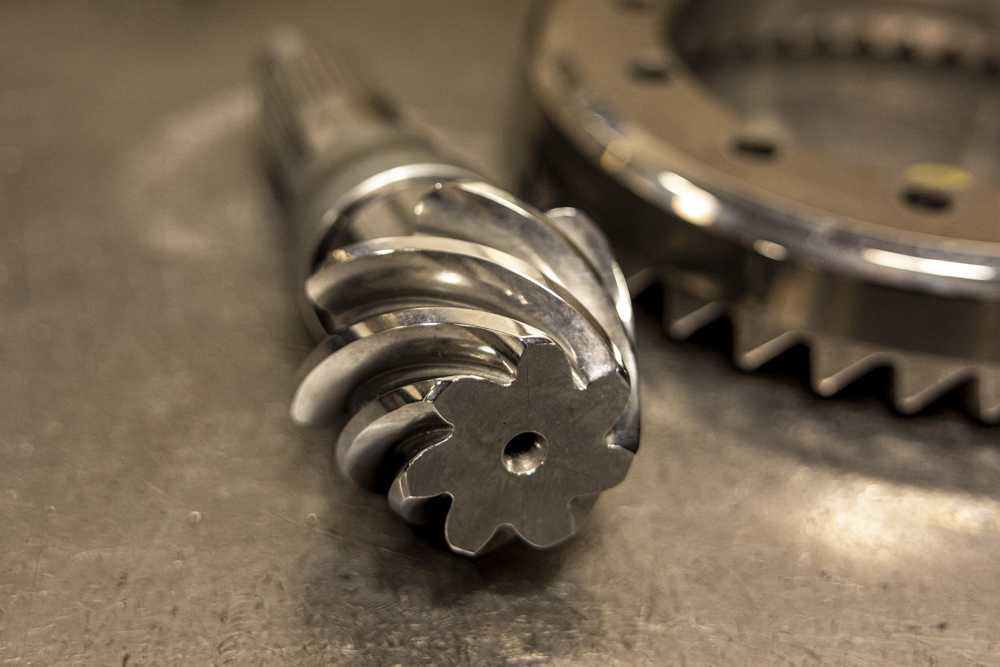
If you take a look at the first image again, you might think that everything already looks pretty smooth. But you can see that the surface is dull and machining marks are more visible. If you zoomed in even more on a microscopic level, it’s a much different story. After heat treating and machining, gears have fine machining marks, ridges, and sharp high points. This is normal, but it plays a large role in how new gears behave during break-in and long term use.
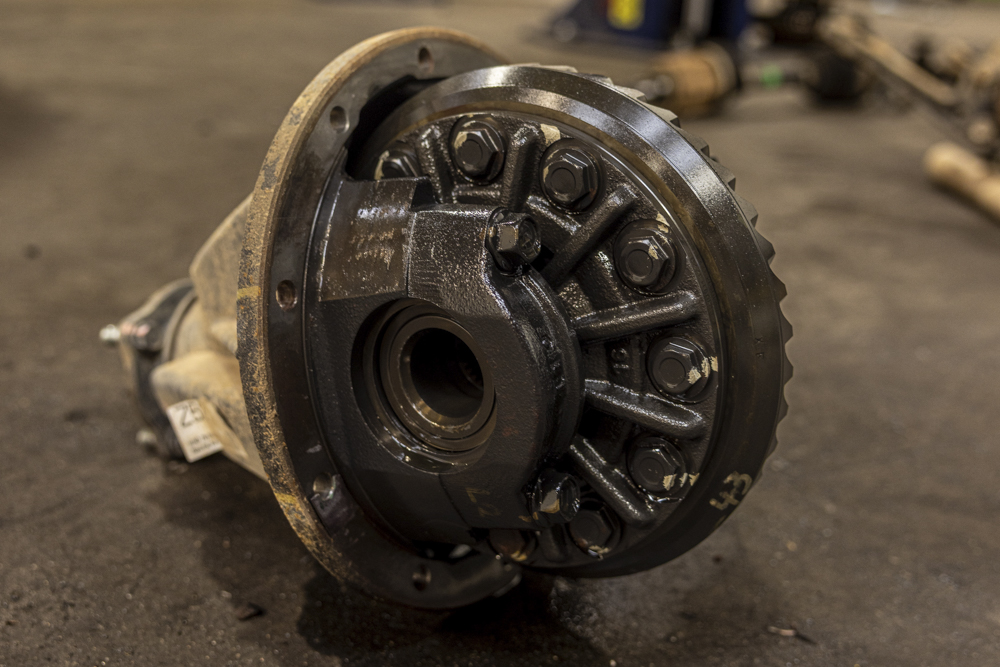
In the photo above, you can see a pinion gear close up (ring gear in background). It’s much more even and has a smooth, polished and shiny surface.
Before finishing, the gear tooth surfaces are directional, meaning that you can see that machining marks that run in specific patterns across them. When the gears make contact, these high spots make contact first. As they break in, the peaks slowly wear down, which is why new gears generate more heat and require very careful heat cycling early on. This is normal, but it creates more friction, noise and stress. This is especially true under heavy loads or with deeper ratios.
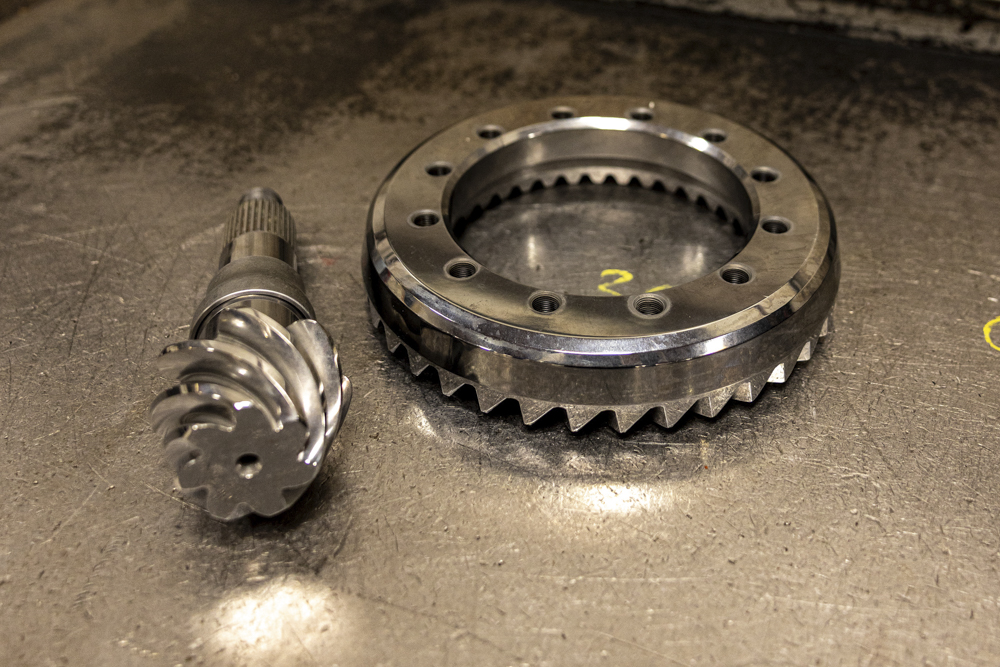
After finishing, the imperfections are largely removed, leaving behind a smooth, polished and uniform surface. The key difference is that now the surface is isotropic. This means that it is consistent in all directions, compared to the directional marks left from manufacturing. It’s good to note that REM does not flatten gear teeth or remove material indiscriminately. It smooths the peaks while the valleys stay intact.
So why does it really matter? Because the smoother surface created equals less friction when the gears first start to work together. This results in a more controlled and predictable break-in and reduced surface stress over time.
Instead of relying on break-in mileage to wear everything into shape, the REM-finishes gears start closer to their ideal place right out of the box. Not to say it eliminates the need for proper setup or break-in, but it does make it easier on the metal surfaces.
How Finishing Works On Rings & Pinions
To briefly outline the process…
- cleaning and prep
- chemical activation
- vibratory finishing
- neutralizing and final polish
The important thing to emphasize is that geometry and tolerances are unchanged!
Benefits
We’ll keep this part relatively simple in a bullet list…
- reduced friction and heat (smooth engagement, less wear, lower operating temp under load, better fuel efficiency)
- easier break-in (less high spots, lower risk during initial driving, still requires break-in)
- increases gear lifespan (less micro-pitting, scuffing, and surface fatigue, better oil film retention, very relevant for deep ratios)
- quieter operation (reduces gear noise and vibration potential)
- more durable (increased resistance to contact and bending fatigue, better load capacity)
What It Does Not Do
It does not…
- correct improper setup/install
- eliminate break-in procedures entirely
- replace quality lubrication under operation
When It May Or May Not Be Necessary
When it is…
- larger than normal tires
- heavy builds
- frequent towing or highway loads
- long term ownership
When it is not…
- stock tire size
- light duty or pavement focused use
- budget conscious re-gears
- infrequent off-road use
REM Vs. Standard Finishing
This process isn’t strictly necessary for every setup, but it does offer benefits that can make a big difference in certain situations.
Without repeating previous info, and in short, REM finishing is a supporting upgrade. It will improve how properly manufactured and installed gears perform and last.
Real World Testing & Experience
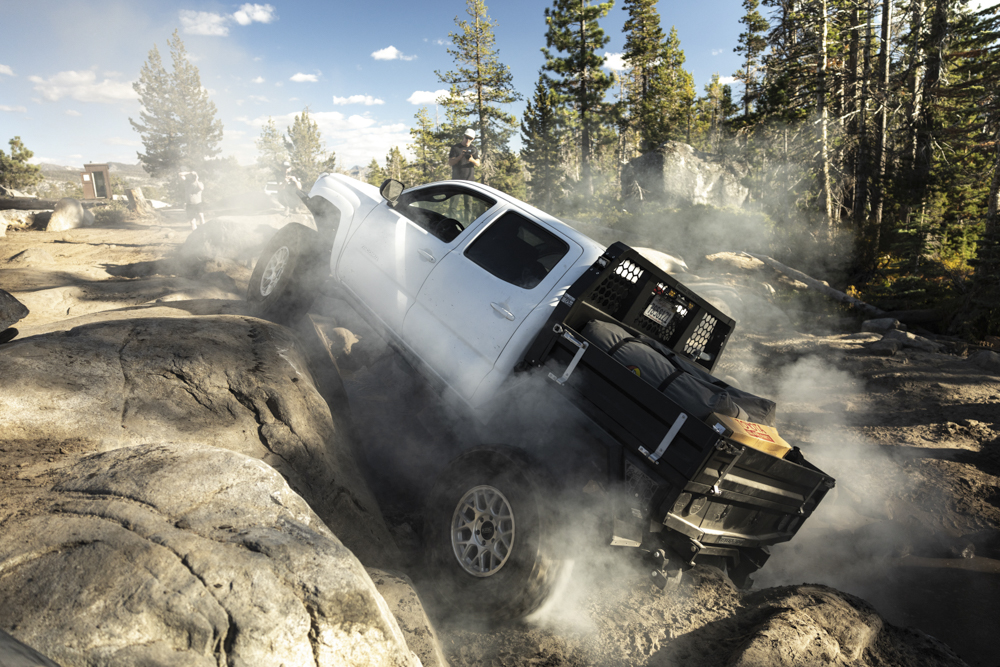
It’s one thing to research and talk about a subject, but completely another to see and experience it yourself.
The image above is Jason Denney’s (@tacodust on IG) 2G Tacoma build. This rig is insanely built and capable. 74Weld portals, Revolution Gear & Axle 4.88s (w/ REM finish), Eaton e-locker, stubby bed flat bed conversion, 37s (now 40s) and a killer suspension setup from Fox and Camburg. And I’m sure I’m missing something.
Right before we went on our Rubicon trip last October, Jason hit me up asking about a last minute gear package. Revolution had stock, and he went with the REM option. Now, take this next part with a grain of salt, we are talking about pushing something like to an extreme due to a short deadline, etc.
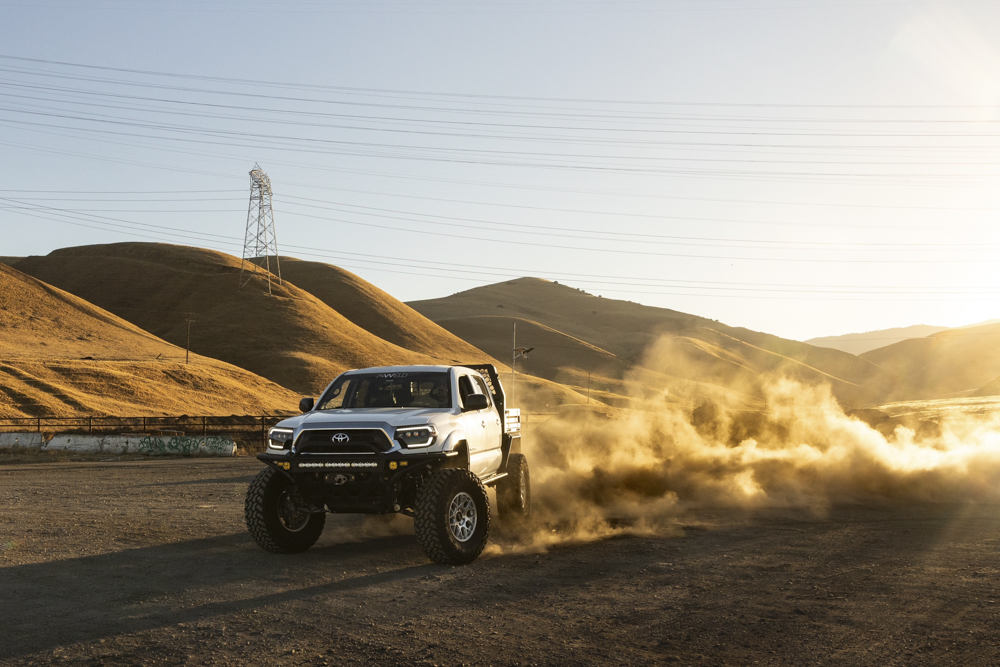
Jason got his gears installed, and with ZERO break-in, literally took it off the trailer and went straight to the burnout you can see above. And then immediately after, he loaded it up, drove it to Northern California, and beat the boots off of this truck for 3 days on the Rubicon, one of the toughest and most challenging trails in the country. He’s driven thousands of miles after returning home and continued to wheel. It also happens to be his daily, so it’s driven every day around town. And on a recent trip to Johnson Valley, Jason broke a CV and still drove it off the trail and home without pulling the axle…
And guess what? Not a single issue. No noise, nothing!
Again, please don’t use this situation as an excuse to do what he did. On tight deadlines, he did what he had to do. As always, these trips and content runs always end up pushing the limits of time and patience. That said, given a killer manufacturer that’s now leading the space for re-gearing, and finished off with REM technology, the experience has proven all the different benefits we’ve talked about through this post.
Final Thoughts
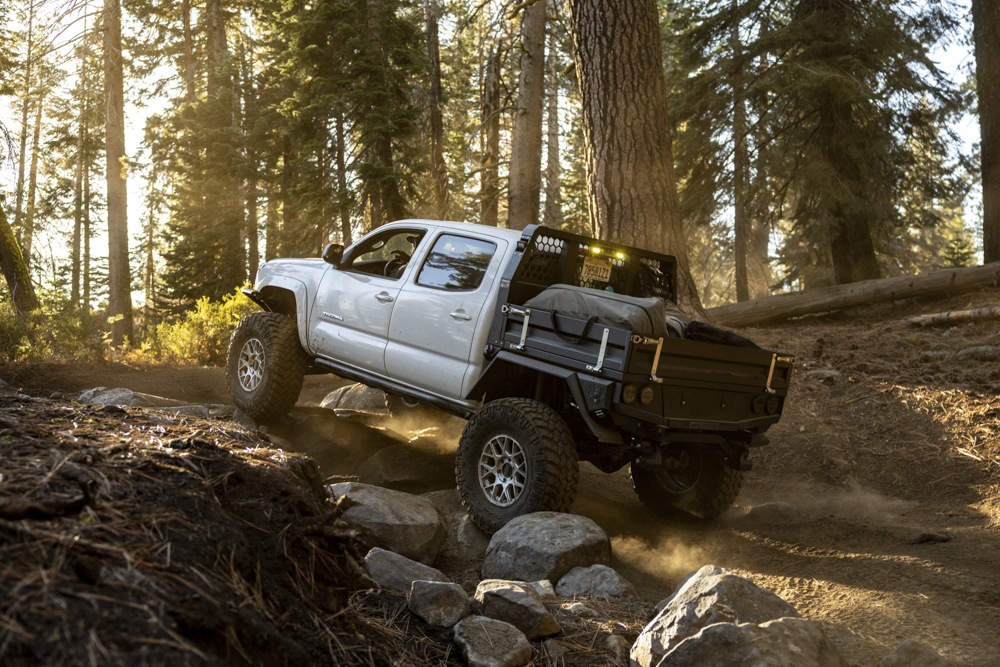
Big picture, REM finishing is a refinement, not a shortcut. Even if we were happy to see that even in the worst case, Jason’s truck hasn’t had any issues.
Make sure you pair REM finishing with good gears (we highly recommend Revolution Gear & Axle), a qualified install shop, and the recommended break-in.
Planning on pushing your truck and keeping it for a long time? While racking up the miles? We think this is a great upgrade.
If you want to know more about regearing in general, check out the posts below.
- How Re-Gearing Affects Your Truck
- Why Re-Gearing Is Important For Big Tires
- 4.88 Vs. 5.29s – How To Choose
- Effects Of Re-Gearing On Gas Mileage
Any questions? Drop them below!

