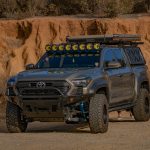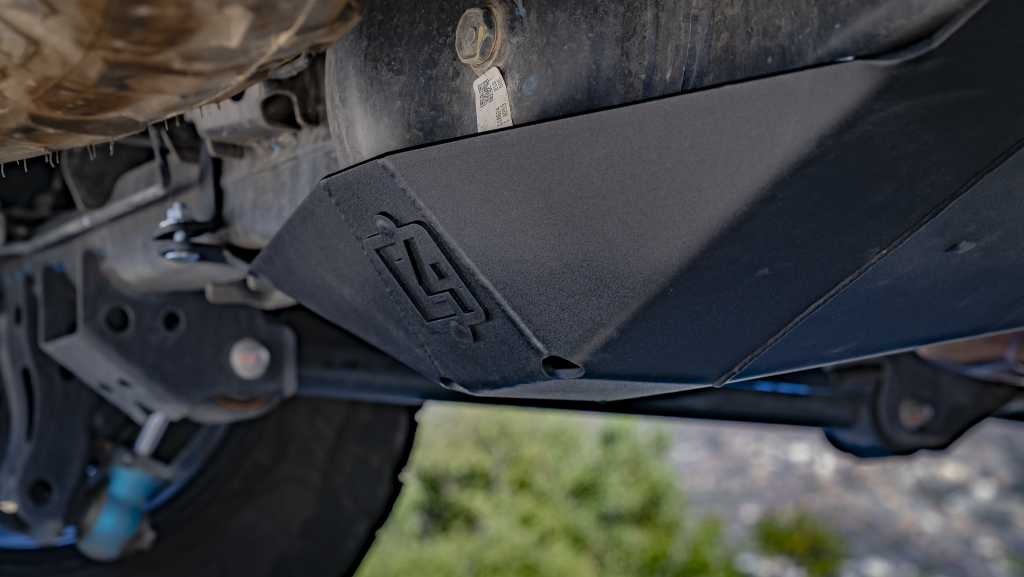
Have you ever set your eyes on the perfect line, but know there will be consequences if you attempt it? We all have. For most Toyota owners, the issue is ground clearance. If you are a serious, hardcore crawler, portals might be your cup of tea. For the rest of us, we try to find some peace of mind to achieve our off-roading happy place.
C4 Fabrication can and will add to that “peace of mind” you seek. Our focus in this article is on the rear differential. For the most part, rear differentials are solid and can handle some serious abuse without issue. However, those unassuming rocks on the trail can become a serious issue when hit with enough force. The worst case is crushing the protection ring around the drain plug, rendering it unserviceable. C4’s rear differential skid adds a layer of protection you will inevitably need.
This isn’t our first C4 product. We’ve run their stuff for many years on different vehicles. Check out our post on the C4 Overland Series Front Bumper.
Table Of Contents
Initial Impressions
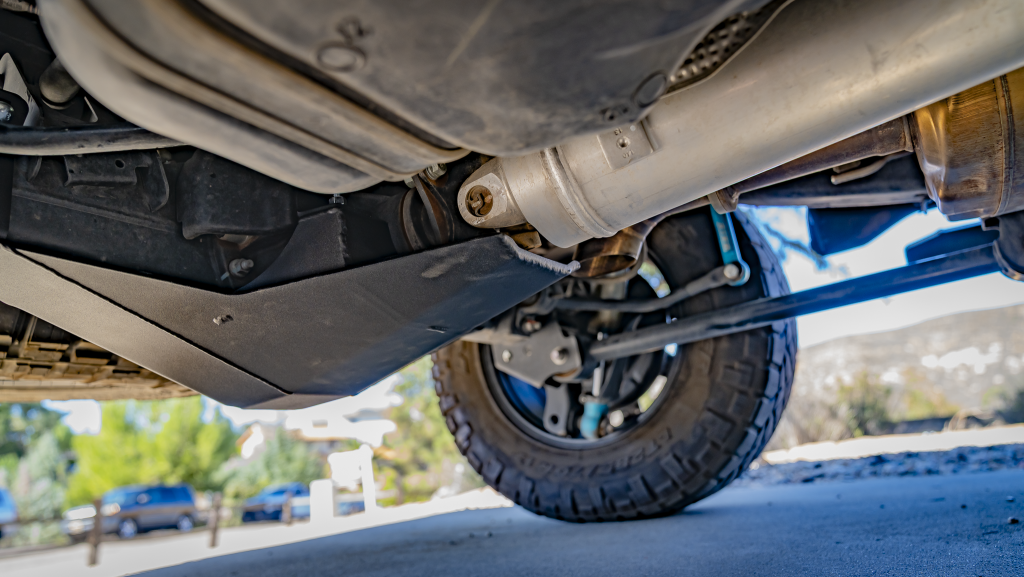
The C4 rear differential cover is simple in design and well-constructed. It’s steel, one-piece construction adds rigidity and minimizes the number of required welds. This whole process gives it a nearly unbreakable functionality. If a weld does break, the structure won’t be compromised. With C4’s bombproof design and over-the-top construction, I have no doubt that this will be an invaluable piece of armor for a very long time.
Quick Features & Specs
- protects your rear diff (drain plug, u-joint, yoke)
- 3/16″ steel construction
- available raw or powder coated
- includes mounting hardware
- weighs 22 lbs.
- does not fit larger hybrid model axles or manual transmission TRD models
- simple bolt-on install
- free ground shipping to lower 48
- made in America
Installation Overview
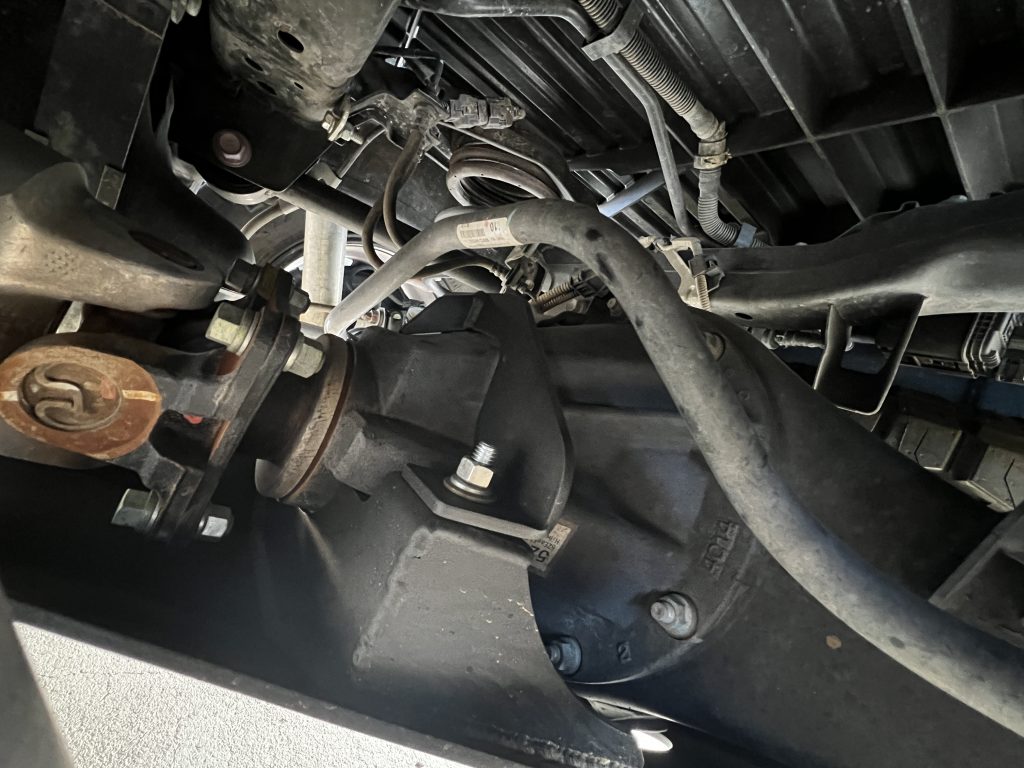
Installation of the rear differential skid plate is very straightforward – probably the simplest mods you can do in fifteen minutes: one plate, three brackets, and six carriage bolts.
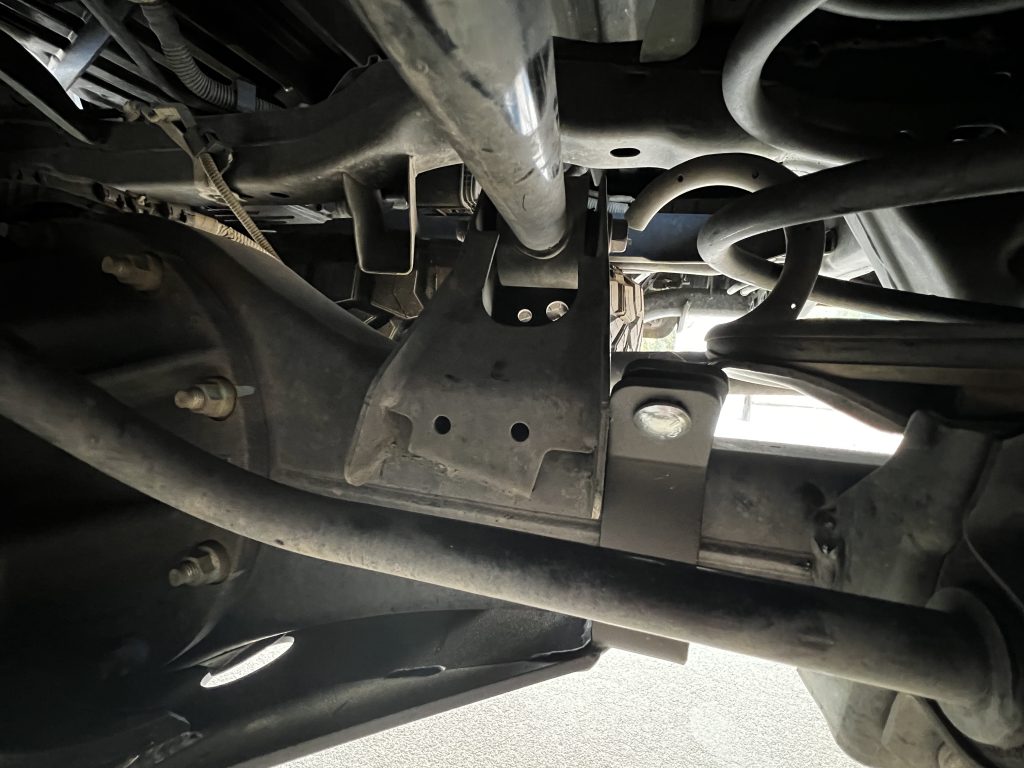
The brackets only align properly one way, with the larger bracket near the drive shaft. The other two smaller ones will cross over the rear axle housing for the rear supports. Once you get the orientation nailed and loosely tighten the bolts, installation is almost done.
As you tighten the carriage bolts, be mindful of how the plate and brackets are seating as you tighten. Using a floor jack helps keep the plate in place while you align the brackets and tighten the bolts. Specifically, the front bracket near the driveshaft. I noticed this one liked to move around a bit. If you ensure all the brackets are flush and not twisted or jammed, you’re golden.
Pitfalls
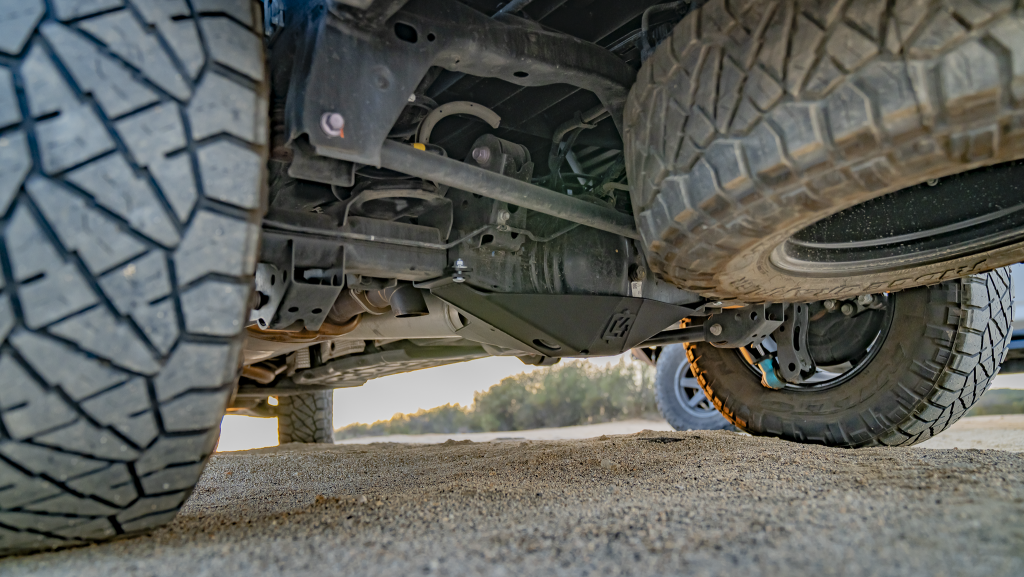
There aren’t many cons for a modification like this, but there are a couple of minor ones.
First, the total weight addition with this skid is 22 lbs. Not exactly light if you’re prioritizing weight savings. But as far as I know, this is one of, if not the only option at the time of publishing. In general, these skid plates are made from steel. Even if there was as aluminum set, if you have ever beaten up a set of aluminum skids, you already know they are a huge pain after they are damaged. Repairing damage on a steel skid isn’t nearly as difficult as repairing damage on an aluminum one. If you plan on adding other skids as well, i.e., shock skids, full belly skids, you probably don’t care all that much about weight. In our case, protection is the top priority.
Secondly, the skid plate will reduce the already narrow ground clearance margins on our Toyotas. It’s negligible, if even noticeable, though. For weekend warriors, this should be an issue. If every millimeter of ground clearance matters to you, my best estimate is less than one inch of reduced ground clearance.
Final Thoughts
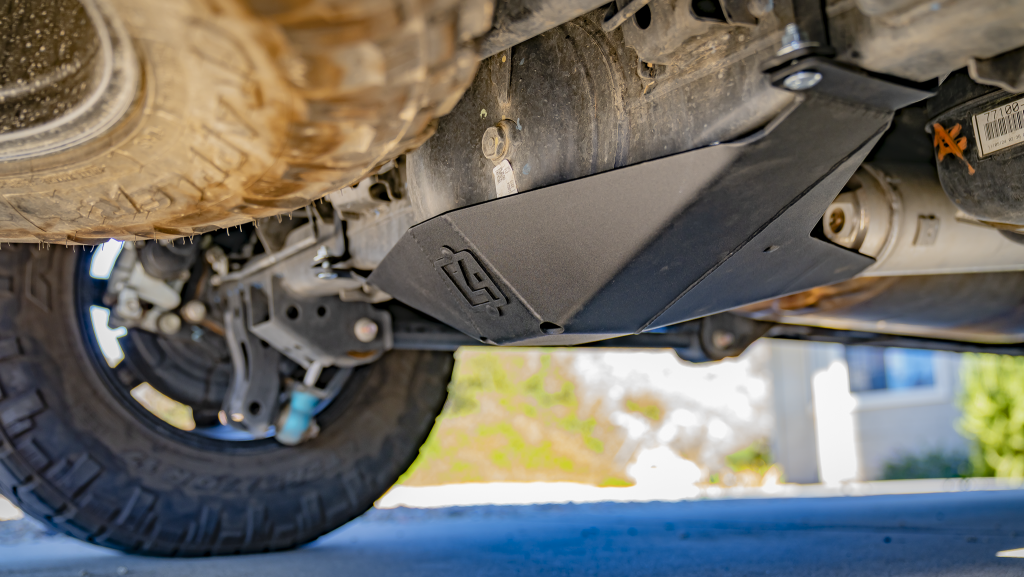
This rear differential skid plate is a no-brainer upgrade for the what-ifs of taking the tougher lines. For my use, there will undoubtedly be situations where this investment will pay off. I have zero complaints about adding this skid plate for the peace of mind when we don’t hit the line perfectly. In my opinion, steel is the only way to go in this area. If you happen to bend it up… bang it back out. That’s the beauty of steel. And, you won’t damage your rear differential. Bonus.
I will never hesitate to put another one on our next build or suggest it to someone looking for a little protection down low.
Thanks for reading, and wheel responsibly!