

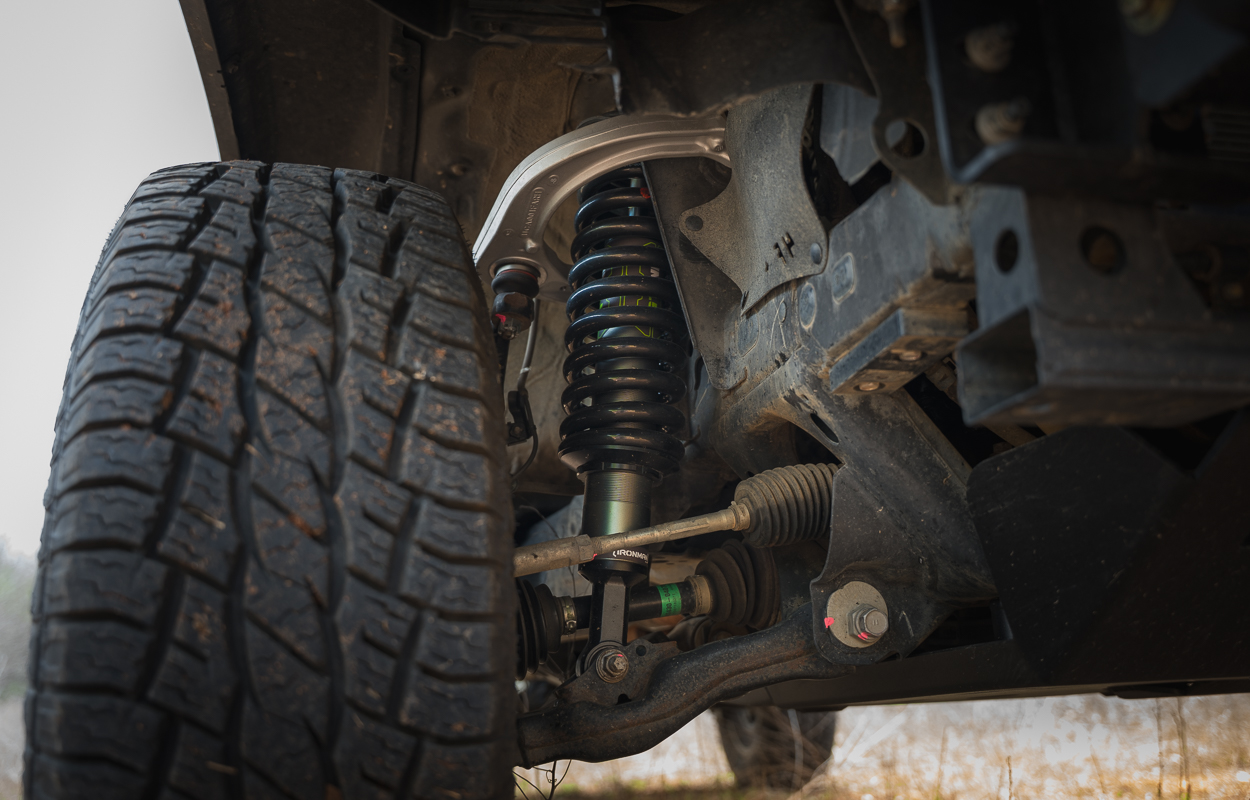
After having the Ironman 4×4 IM2.5 suspension on my 2019 Toyota Tacoma TRD Off-Road for over 7,500 miles, I’ve gotten a solid feel for how this system actually performs in real-world use on and off the trails.
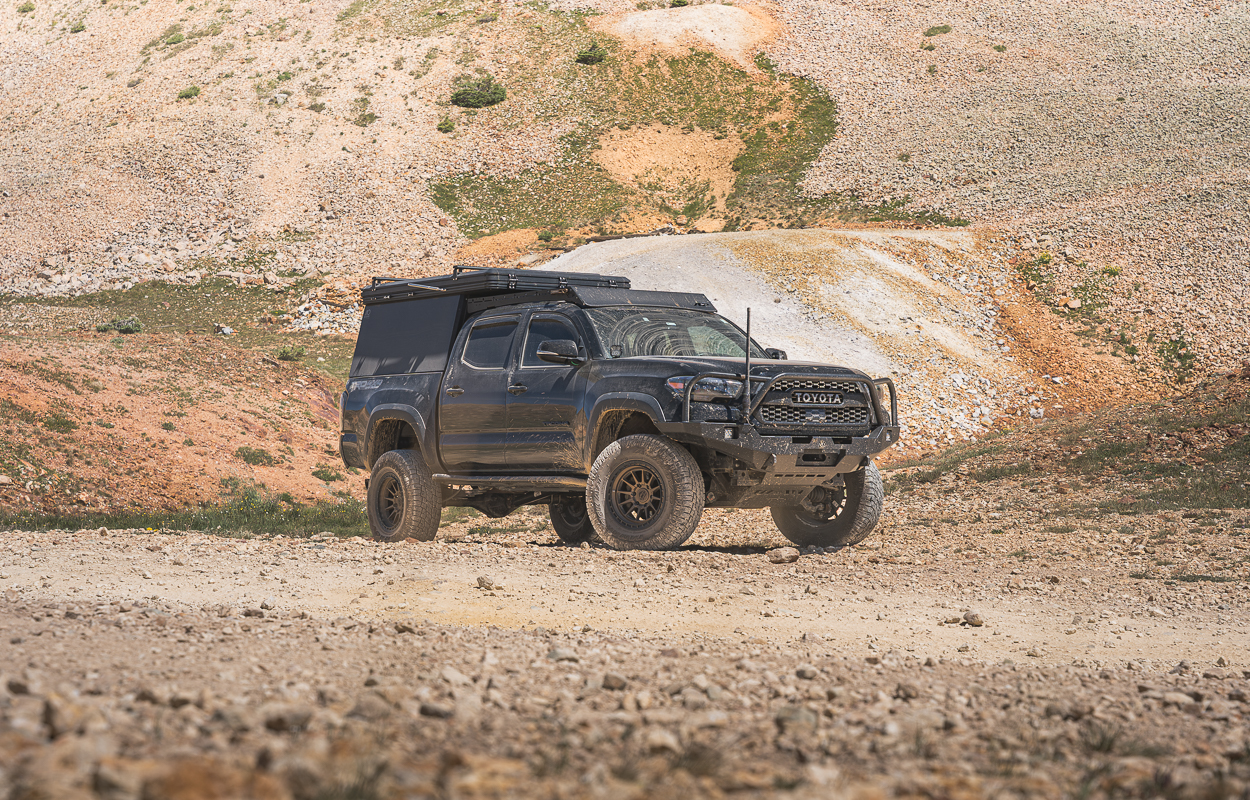
Since installing it, I’ve driven my truck daily, taken it on trails across Arkansas, and made a long trip out to Colorado, all while running a fully built and loaded setup. My truck isn’t lightweight by any means and doesn’t spend all its time on pavement, so my experience with the IM2.5 is how it behaves under consistent weight and long-term off-road use.
To note, this suspension really works best when you’ve got a built truck. That’s when it shines the most.
While I tested these on my 3rd Gen (16-23) the same kit works on the 2nd Gen (05-15).
Table Of Contents
My Truck’s Set Up Overview
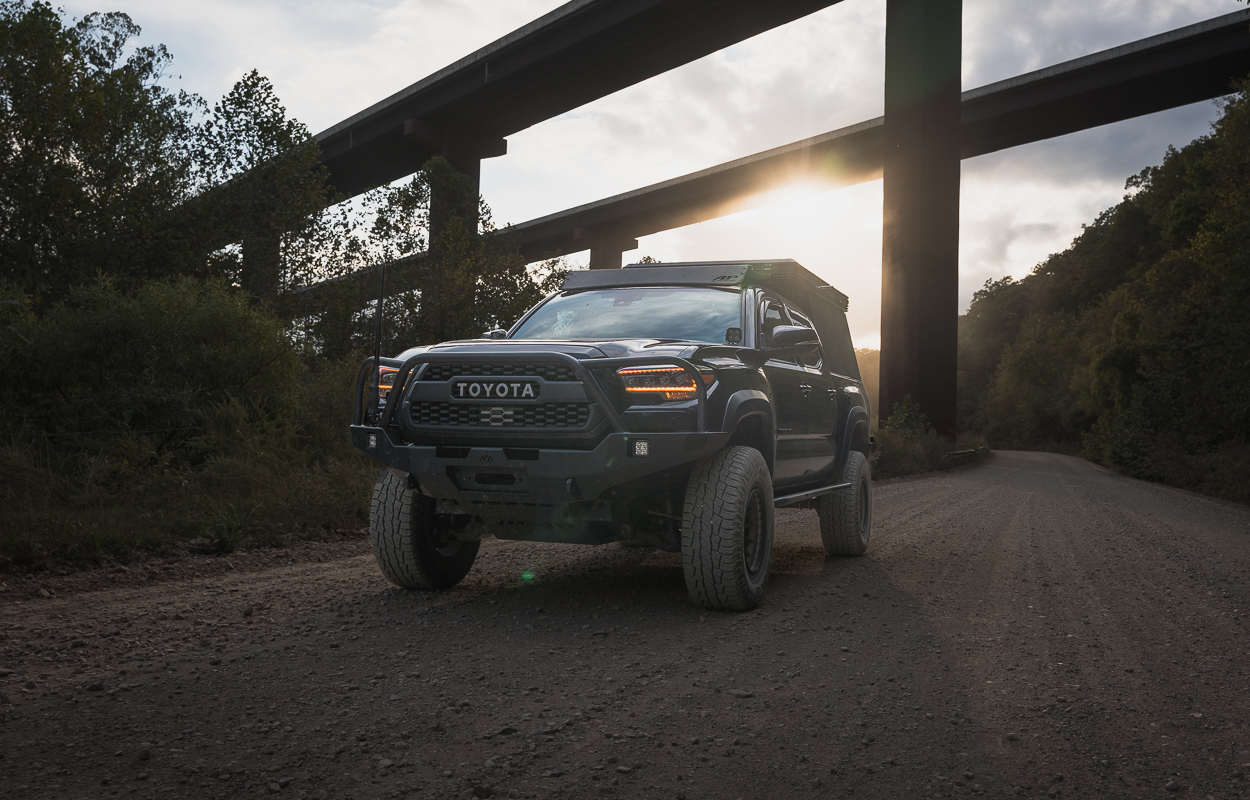
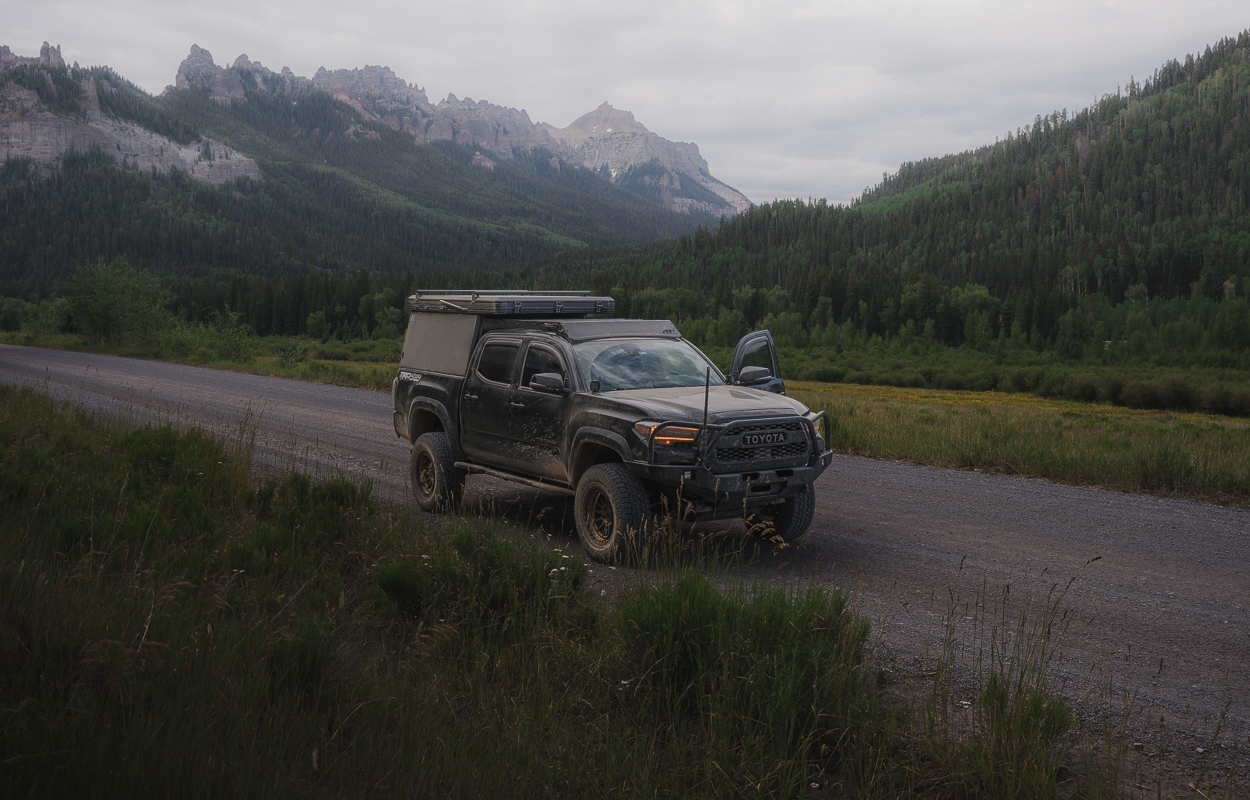
For context, my exact setup is a 2019 Tacoma TRD Off-Road Double Cab, Short Bed, V6, running 285/70/17 all-terrain tires. I installed the suspension system straight out of the box with no preload adjustments, which provided roughly 3 inches of lift in the front and a little over 3 inches in the rear. I opted for the full kit, including the IM2.5 front and rear shocks, the Pro Forge UCAs (Stage 2 kit), and heavy load leaf springs.
As far as weight goes and how I use my truck, I’m running a Backwoods hybrid front bumper, a Backwoods rear bumper, a full skid plate system from Backwoods, All-Pro rock sliders, a camper in the rear, plus other accessories and gear loaded in the bed.
Break-In Period & Impressions Over Time
One thing that stood out early on was how noticeable the break-in period was. For the first few hundred miles, the IM2.5 kit felt firm, but not in a bad or uncomfortable way. After around 500 miles, the suspension clearly loosened up and became more compliant. The overall ride felt more settled and controlled, and was most comfortable both on and off-road.
That said, even after break-in, one thing I noticed is worth mentioning: when the suspension is cold, or your truck has been sitting for a while, it can feel slightly bouncy over quick, repetitive bumps. Once you’ve been driving for a bit and everything warms up, that feeling almost completely goes away.
This lines up with Ironman’s claim that the IM2.5 is tuned to adapt to different terrain and conditions. In practice, it does feel like a suspension that needs a little movement and warming up before it really starts to shine.
On-Road Performance (Daily Driving & Highway)
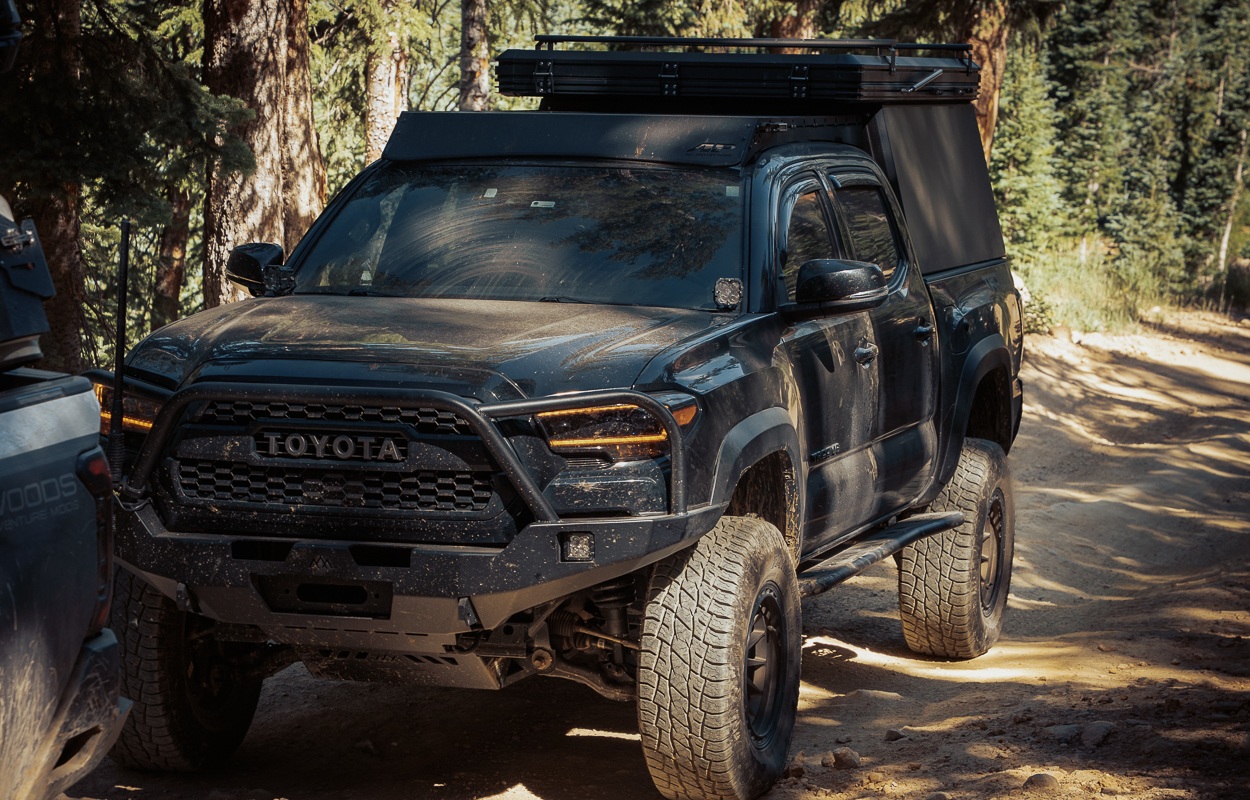
Since my truck is my daily driver, I spend a lot of time just commuting. So far, the IM2.5 has been solid in that scenario. Around town, the truck feels controlled and predictable, handling bumps and road imperfections well, and it definitely feels more composed than stock. The ride is still on the firmer side, but that firmness is more control rather than a harsh ride.
On the highway, this is where I noticed one of the biggest improvements over my previous suspension. Even without a sway bar, the truck feels planted and stable at speed. There’s significantly less body roll than I had with my Eibach Pro Truck Stage 1 setup, especially during lane changes and big corners.
Dirt Roads, Washboard & Trail Use
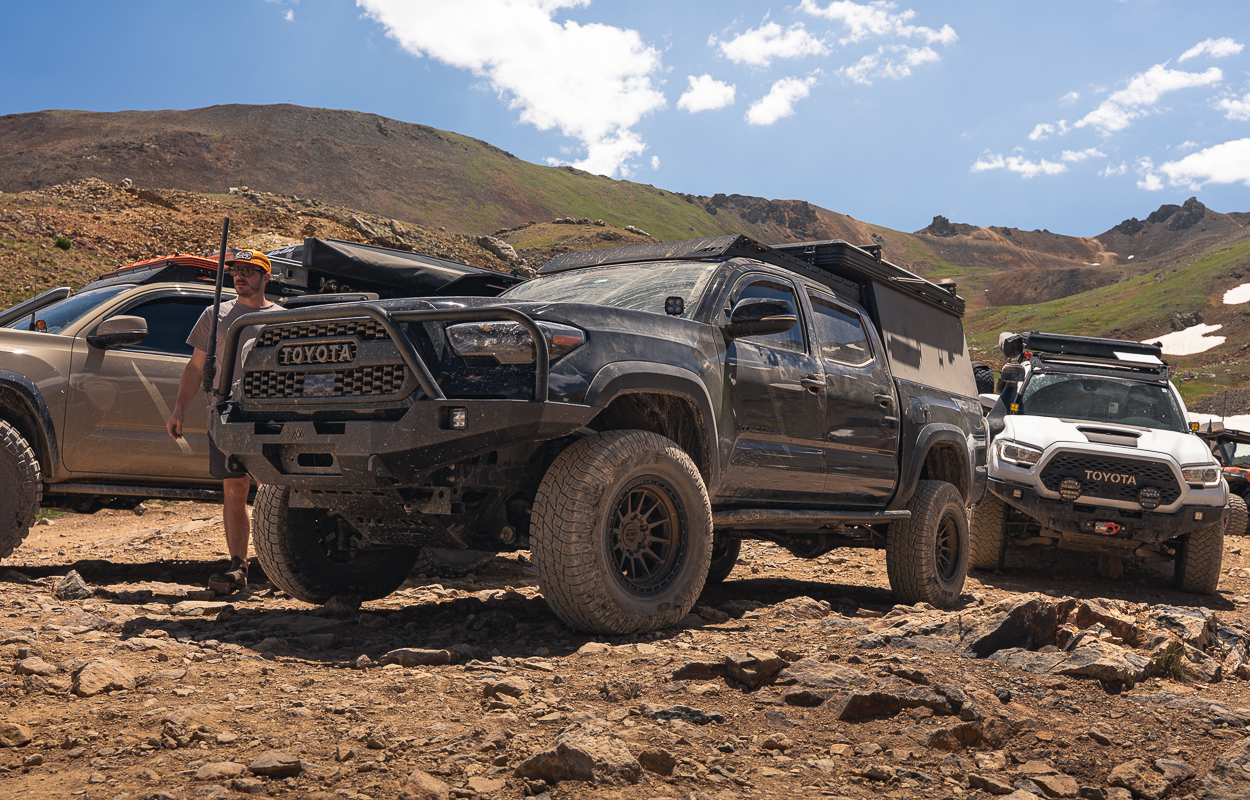
Off-road is really where the IM2.5 really started to showcase its true performance. On washboard roads, the suspension initially feels a little jittery, but after a few minutes of driving, it smooths out dramatically and almost floats over minor imperfections. There’s a clear difference once the shocks are working consistently and warmed up.
For slow-speed crawling and technical trails, the IM2.5 has also been excellent. It keeps the truck stable and controlled, minimizing excessive body movement. I never felt uneasy or like the truck was tipping, even on uneven terrain or off-camber sections.
It also handles larger bumps and obstacles pretty well. The suspension soaks up most of the impacts without harshness, and I haven’t noticed any harsh top-outs or bottom-outs during my rides.
Colorado Trip & Long Distance Travel
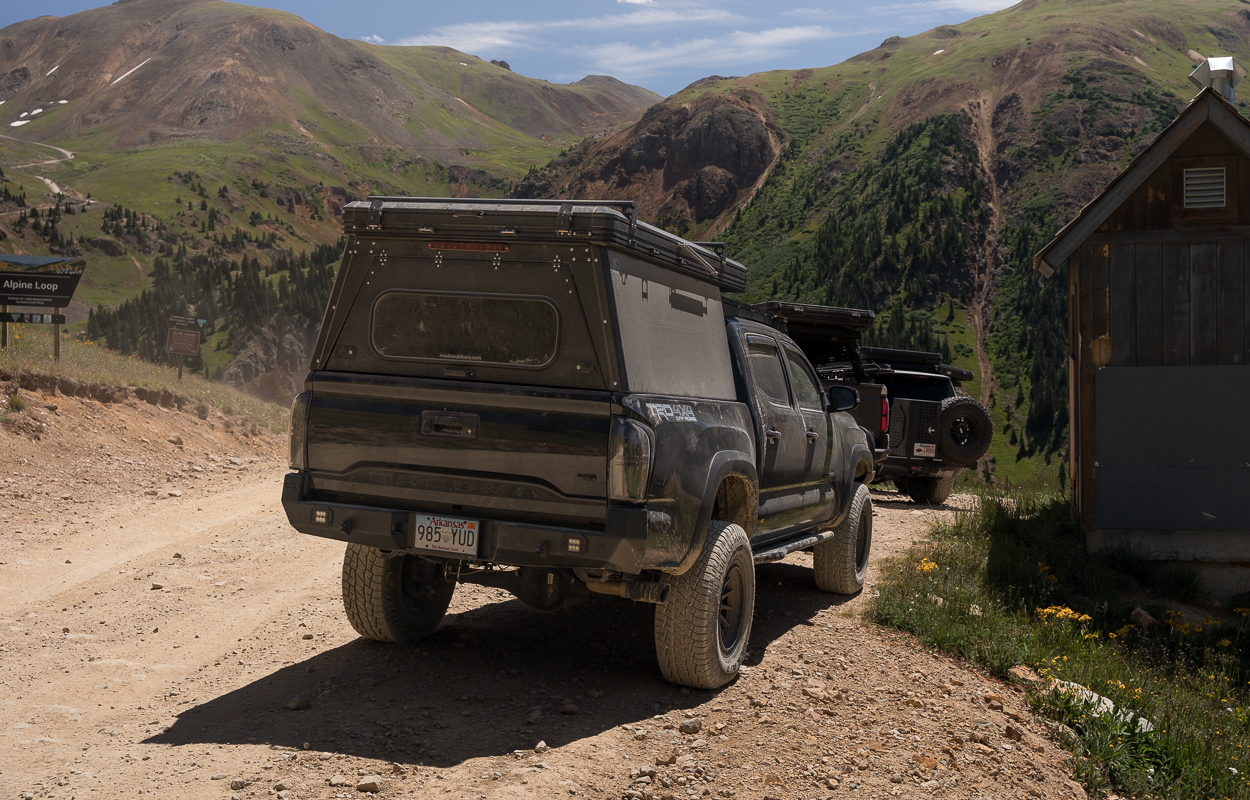
One of the best tests for this suspension was my 16-hour road trip to Colorado, filled with a lot of highway miles and trails I’d never experienced before. The drive was comfortable, and the truck stayed planted even on the super windy stretches of highway, despite my truck’s heavy weight from all the gear I packed. Once I was there, the IM2.5 handled everything I threw at it, such as rocky roads, mountain passes, switchbacks, and lots of hill climbs.
This is where I really felt comfortable with the suspension and felt like I had experienced it to its full potential. It’s super capable off-road but doesn’t sacrifice on-road drivability.
Durability
Durability-wise, the suspension has been solid. I haven’t experienced squeaks, clunks, unusual noises, leaks, or performance issues. The ride quality has also remained consistent and is very predictable after that initial break-in period.
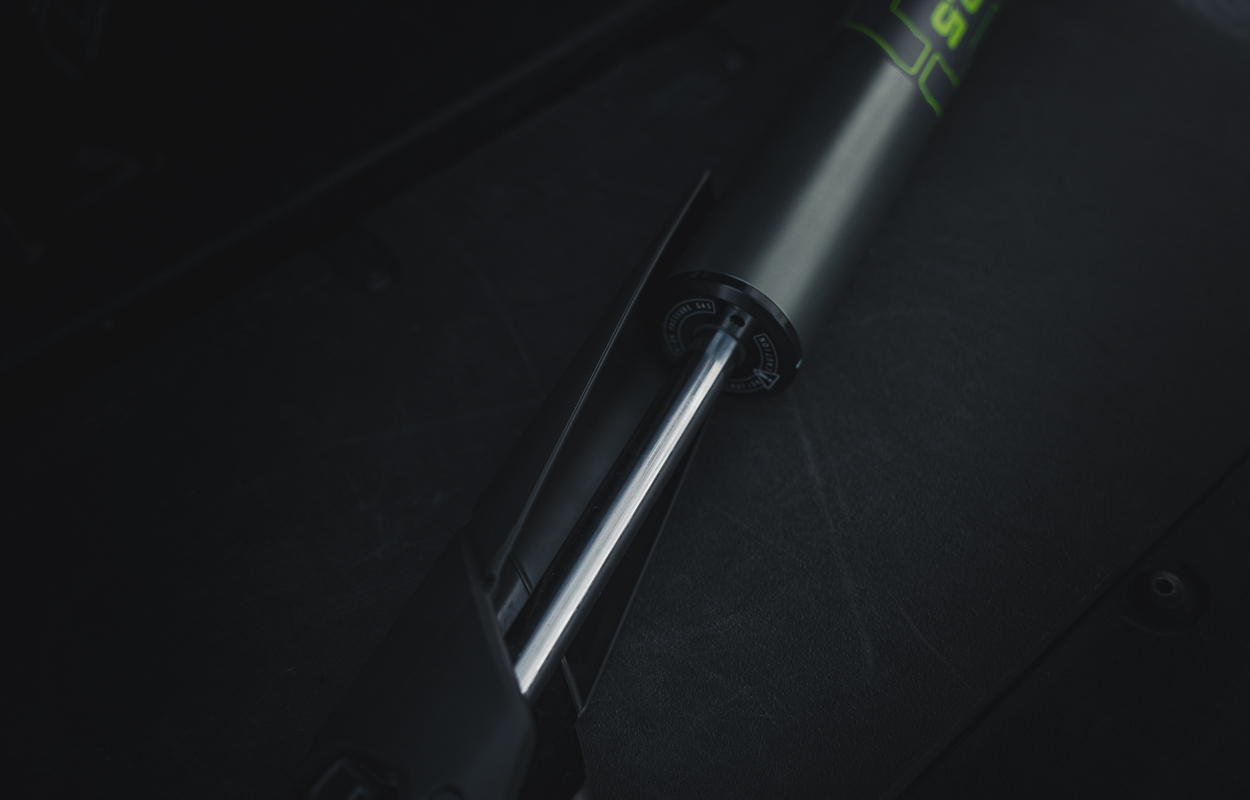
One minor thing I noticed is that the green-tinted coating on the shocks shows some chips and discoloration in a few spots, but that’s kind of expected given the abuse I put them through. Functionally, it still feels just as good now as it did when I put it on the truck.
Final Thoughts
What I’d Change
If I could change anything, it would be the lack of guidance around adjustability. The shock bodies are threaded and marketed as adjustable, but there are no clear instructions, no tools, and little explanation of the possible adjustments.
I also wish that Ironman offered more front spring rate options. With a heavy front end, a slightly stiffer spring could help ride quality without sacrificing comfort.
That said, I would absolutely get the IM2.5 again and recommend it to anyone looking for a budget-friendly but performance-focused suspension for their Tacoma. For my use case, like daily driving, long trips, and off-roading with a full-loaded truck, it’s been a very reliable suspension that performs better than you would expect.
Who I’d Recommend the IM2.5 To
I think the Ironman 4×4 IM2.5 suspension is a great option for Tacoma owners who run a bit of constant weight and want a strong balance between daily driving and off-road use.
Compared to other brands, I think these are definitely an upper-middle-tier (to upper) performance option for those who want more than budget kits like Eibach and Bilstein, but don’t want to break the bank or need race shocks and the maintenance from brands like King, etc.

How much heavier over stock are you? I’m in Europe and I’m running this kit on a 2020 Hilux and I find it WAAAY too stiff. Ironman4x4 told me their front coil spring is 800 lb/in, which is about 200-250 more than stock! No wonder it rides stiff on an empty truck like mine. I’m going down the custom spring route because like you said, Ironman doesn’t offer different front coil springs. But then I know the Tacoma is also slightly heavier than the Hilux so perhaps it’s better suited for it.
Great article, this article was really helpful and made me understand more that not all suspension isn’t made with the same capability, ride quality, or performance. I’ll mostly definitely be sharing this article next time to someone that is looking for a new suspension for their build.