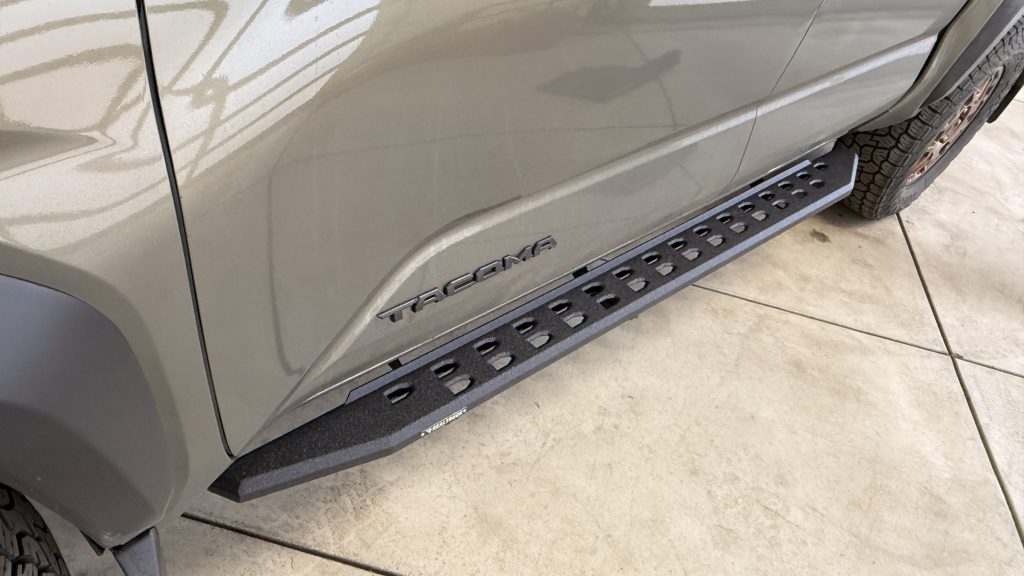
The modern-day running board is cool, hear me out. These aren’t your grandpa’s running boards. After hours of reading reviews, comparing weights, questioning materials, and trying to decode whether “16-gauge galvanized steel” is somehow different when spelled by different brands. That research paralysis led me to realize that modern running boards may be all I need.
Enter the Go Rhino RB20 Slim Running Boards. A product that does exactly what it should, backed by a long-standing company with a solid reputation based on years of success.
Specs
- Construction: 16-gauge galvanized steel
- Step Width: 5.5 inches
- Finish Options: Textured Black Powder Coat or Protective Bed Liner Coating
- Installation: Bolt-on, no drilling required
- Warranty: Limited Lifetime Structural / 5-Year Finish
- Pricing: $450+ (more for certain features like bed liner)
- Tacoma-specific mounting brackets and hardware
Note: This is compatible only with double-cab configurations.
Table Of Contents
The Running Board Reality Check
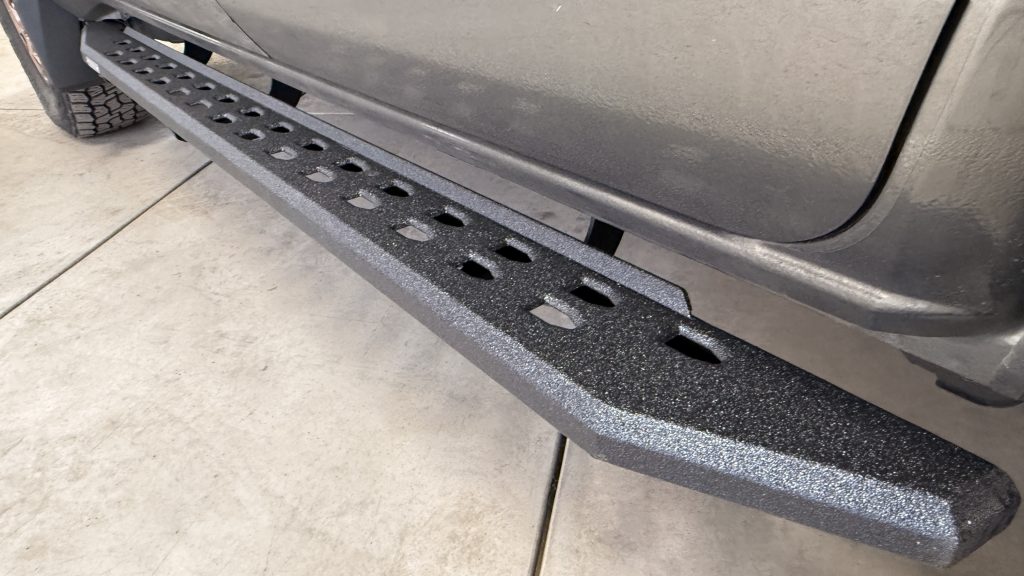
Before we dive into the RB20 Slim specifically, let’s establish some basic truths about running boards that the industry really does justice or due diligence.
First, running boards are not rock sliders. They’re not meant to save your frame when you’re crawling over boulders in Moab. If you’re doing serious rock crawling, you need sliders. Period. Running boards are made for 3 things: making entry and exit easier, providing some rocker panel protection from road debris, and serving as a shield from door dings caused by econobox vehicles… that’s it. Well, also maybe from the token shopping cart left behind in the supermarket parking lot.
Second, almost every legit running board on the market is made from the same basic materials: steel or aluminum, powder-coated or not. The differences? Mostly cosmetic, with some variation in thickness and mounting systems. But the fundamentals are identical across 90% of products out there. Some are still made of fiberglass or even plastic, but those aren’t legit… so who cares.
Third, and this is important: you don’t need to spend $1,200 on running boards for your Tacoma. The $500-$700 range gets you quality materials, solid construction, and a warranty. Anything above that is paying for brand prestige or features you might never use.
Now, with that context established, let me explain why the Go Rhino RB20 Slim Running Boards sit in that perfect sweet spot of performance, price, and practicality for the 4th Gen Tacoma.
Ground Clearance
The reality is, if you’re concerned about losing ground clearance, you probably shouldn’t be installing running boards at all. They’re inherently a compromise between convenience and capability. The RB20 Slim minimizes that compromise better than most alternatives, but it’s still a trade-off.
If you want both a step and maximum protection, you need flat (0 degree) sliders with integrated step plates, which cost significantly more. So, the RB20 Slim is the practical middle ground.
What Makes This One Different & “The Flip”
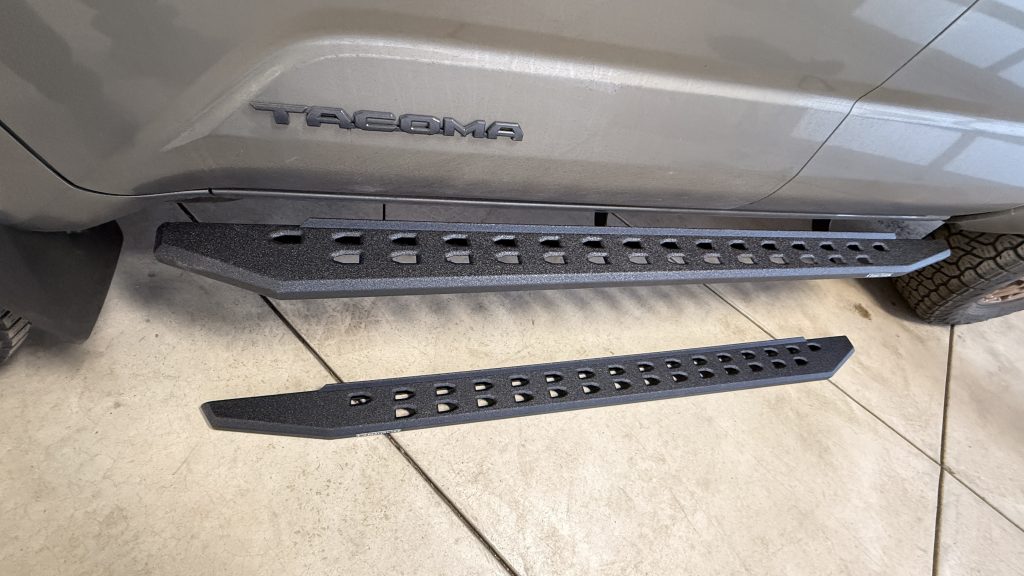
The RB20 Slim is Go Rhino’s answer to a very specific problem: the original RB20 Running Board is 7.5 inches wide, which is great for accessibility but can reduce ground clearance and add significant visual bulk. The Slim version reduces that to 5.5 inches while maintaining the same rugged construction and off-road-inspired styling.
For Tacoma owners who occasionally hit logging roads or mild trails but aren’t rock crawling every weekend, the RB20 Slim strikes the ideal balance. You get the convenience of a running board without sacrificing the capability you bought a Tacoma for in the first place.
The design pulls directly from the Ford Raptor’s running boards aesthetic, angular, aggressive, with bullet-stamped perforations that allow water, mud, and snow to drain. It’s functional without being gimmicky. The perforations aren’t there to look cool; they’re there to prevent ice buildup in winter and mud accumulation in wet conditions. Given the Tacoma’s reputation as a go-anywhere midsize, this functional design makes sense.
Another caveat that the Tacoma enthusiast world has created is the “Flip” for the RB20 line. Go Rhino originally intended their running boards to be installed as intended, which means with the “widest tip” pointed toward the engine. However, many have flipped it, putting the passenger-side running board on the driver’s side and vice versa. In my opinion, this makes the most sense, as it protects the front bed side rocker panel from rock chips… which we all know is a real thing. I think the “Flip” is legit from an ergonomic perspective, as no one needs the widest point located directly under the hinge of the door where you never step. I also think they look cooler this way.
However, do what you like and try “The Flip” for yourself.
Construction
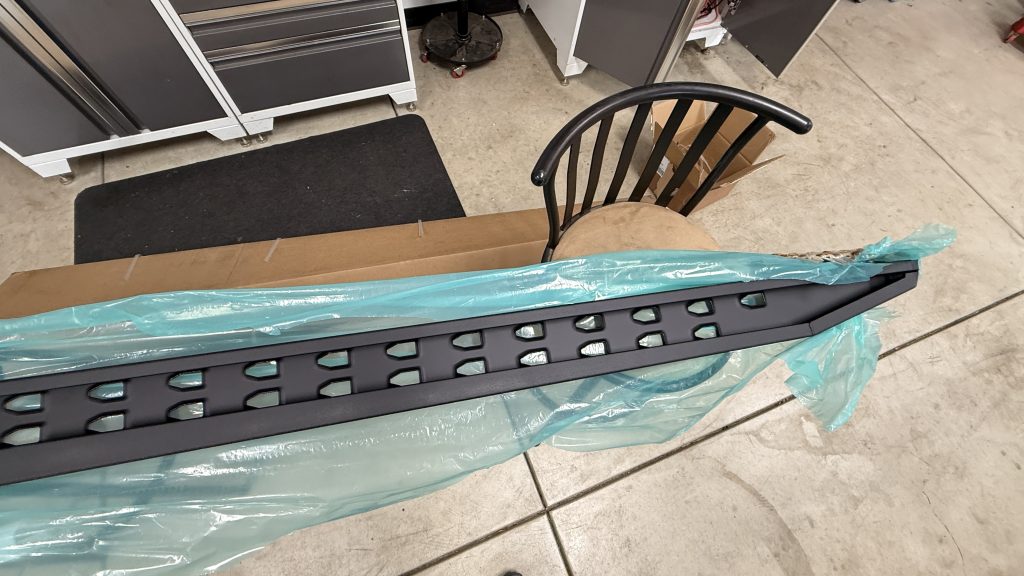
The Go Rhino RB20 Slim is made from 16-gauge galvanized steel. Here’s what that actually means in plain English: thick enough to handle impact without denting easily, but not so thick that you’re adding unnecessary weight. Galvanized means it’s zinc-coated for corrosion resistance, which matters more than you think if you live anywhere with salt on the roads or high humidity.
The construction features fully welded boxed ends. This isn’t a detail to gloss over, as many cheaper running boards use stamped or plastic end caps, which fail faster and allow water intrusion. Boxed steel ends are sealed, preventing debris from entering the board and causing rust from the inside out.
The mounting brackets are vehicle-specific, which means everything looks OEM once installed. Everything is designed to bolt directly to factory mounting points: no drilling, no cutting, no adapting.
And here’s something I appreciate: Go Rhino is owned by RealTruck, which means you’re buying directly from the manufacturer. The pricing is transparent, the warranty is solid, and there’s no middleman markup.
Bed Liner Coating Option
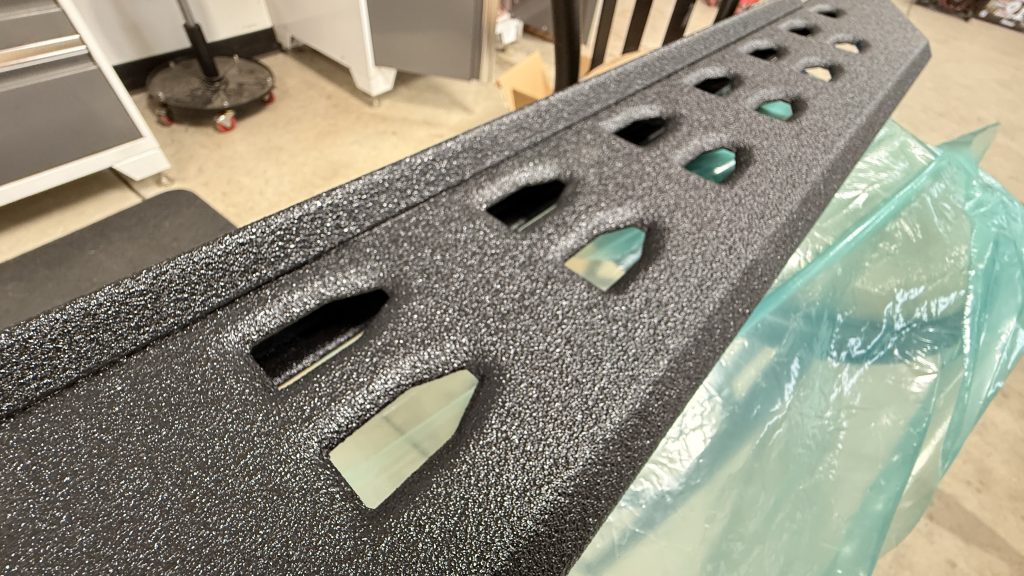
The RB20 Slim comes in two finish options: textured black powder coat or protective bed liner coating. Most people default to powder coat because that’s what they’re familiar with. But the bed liner coating option deserves serious consideration, and here’s why.
Bed liner coating, sometimes called polyurethane or spray-on liner material, provides superior impact resistance compared to powder coat. If you regularly deal with flying gravel, road debris, or harsh weather, the bed liner finish will hold up significantly better over time. Powder coat is tough, but it can chip and scratch. Bed liner coating is designed specifically to absorb impacts without showing damage.
The texture of the bed liner coating also provides better traction than that of a powder coat. If you live somewhere with snow and ice, this matters more than you might think. Stepping onto a wet powder-coated surface can be slippery; bed liner coating maintains better grip even when covered in snow or mud.
The bed liner finish also maintains its appearance longer. Powder coat can fade over time, especially in high-UV environments. The bed liner coating resists UV degradation so that it won’t look chalky in a year. And to be clear, the bed liner coating is only on the top and sides; the bottom of the RB20 slim is powder-coated (see the picture above).
The trade-off? Bed liner coating is slightly more expensive, usually around $50-$75 more, and it has a more aggressive, textured appearance. If you want a sleek, smooth look, powder coat is your choice. But if you prioritize durability and function, bed liner coating is the better investment.
For Toyota enthusiasts who actually use their trucks, I’d argue the bed liner coating is worth the premium. But if you want a cleaner aesthetic, powder coat works fine.
RB20 Slim Vs. Standard
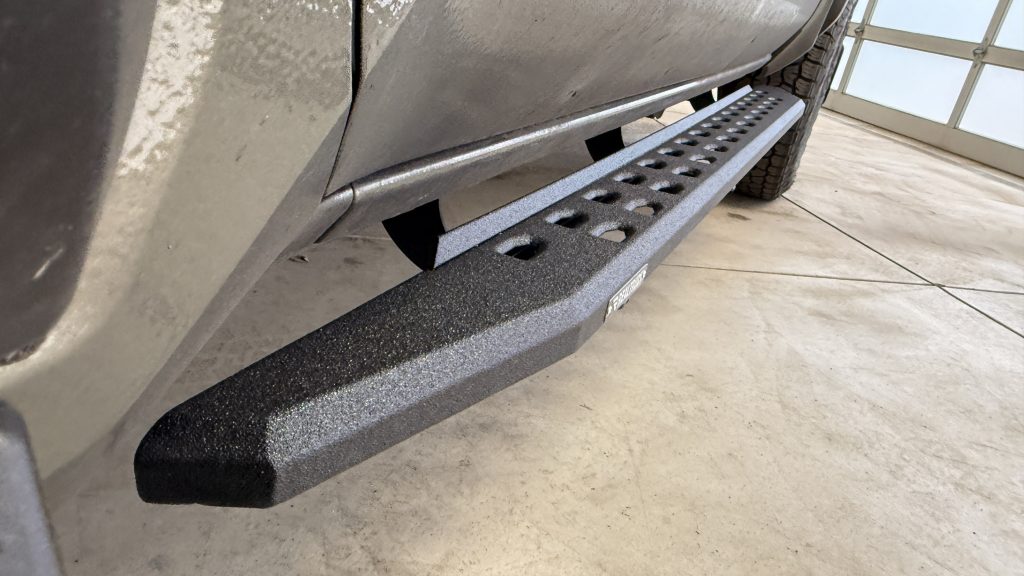
Go Rhino offers the standard RB20, which is 7.5 inches wide at the front and 6.5 inches at the rear. The RB20 Slim is 5.5 inches wide. That 2-inch difference sounds minor, but it’s significant in the real world.
For most 4th Gen Tacoma owners, the Slim is the better choice, and here’s why: the Tacoma’s proportions are slightly more compact than a full-size truck, and you’re not gaining that much additional stepping surface with the standard. However, slightly more are losing ground clearance and adding visual bulk that can make the truck look bottom-heavy.
The Slim’s 5.5-inch width is more than adequate for safe entry and exit, unless you’re exceptionally tall or have mobility issues. The step height on the 4th Gen is already more accessible than the previous generation’s, thanks to its slightly lower ride height, so the narrower step doesn’t compromise functionality.
In my opinion, the Slim also looks better on the Tacoma. The standard RB20 can overwhelm the vehicle’s lines, especially in functionality Double Cab models. The Slim maintains the aggressive styling without looking like you bolted full-size truck parts onto a midsize.
Obviously, there are exceptions. If you regularly have elderly passengers or family members who need maximum step width for safety, the standard RB20 might make more sense. If you’re building a dedicated overland rig and want maximum rocker panel protection, the wider board provides more coverage against debris.
But for 90% of 4th Gen Tacoma owners, the Slim hits the sweet spot: enough width for function, slim enough to maintain clearance, and aesthetics that complement the truck’s proportions.
Installation Overview
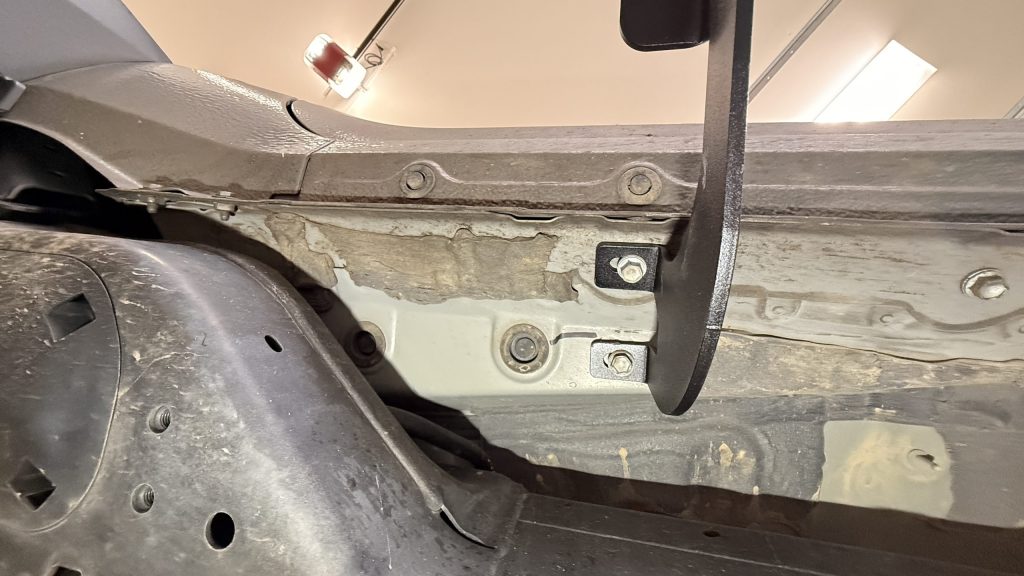
If you have basic mechanical skills, a socket, a set, and a torque wrench, you can install these yourself in probably less than 2 hours. The instructions are clear, the brackets are pre-drilled, and everything lines up to factory mounting points. No surprises.
Also, do yourself a favor and apply anti-seize compound to the body bolts and blue locktite to the black bolts before installation. This isn’t in the instructions, but if you ever need to remove these boards, you’ll thank me. Bolts exposed to road salt and moisture will seize without anti-seize, and the lock-tite will prevent bolt loosening from vibration created while driving.
Final Thoughts
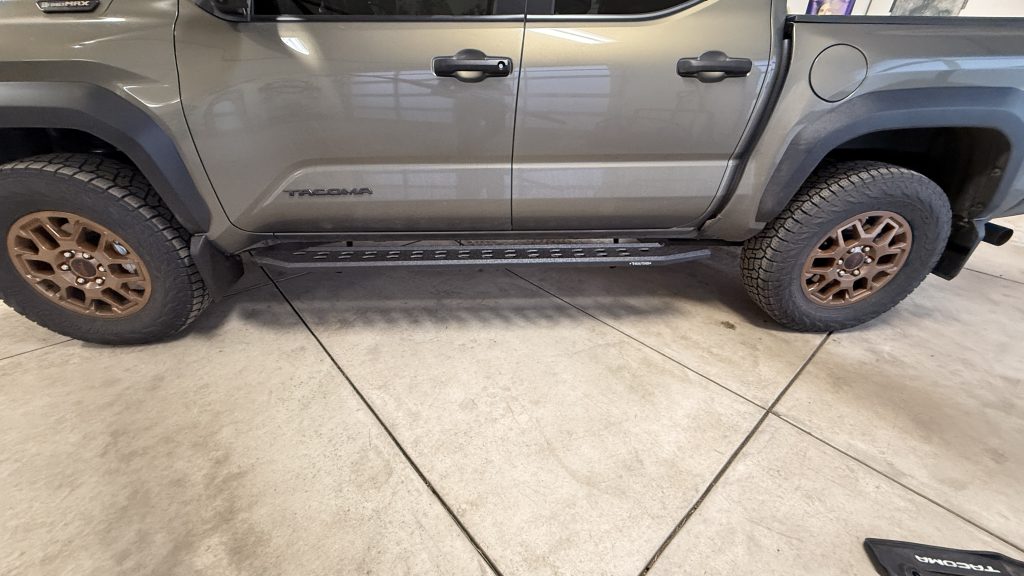
In a market full of products that realistically might be overkill for the average consumer, the Go Rhino RB20 Slim running boards are exactly what they claim to be: a well-built, reasonably priced, highly functional running board that looks good and performs as expected on the 4th Gen Tacoma. They’re not revolutionary or overengineered – just a super solid, well-built product that looks awesome. It succeeds by being good at one thing: providing a durable, practical step that doesn’t compromise your Tacoma’s aesthetics or capability and is durable enough for some light off-roading.
Should you buy them? If you want running boards that balance function, ground clearance, and price while looking great and minimal, then yes. If you’re serious about rock crawling, no, get some true rock sliders. Or, if you want the absolute widest step possible, get the standard RB20. For my needs, the RB20 Slim is a no-brainer, especially with the bed liner coating option.
Thanks for reading. Be kind to yourself and others. The world needs more of it.