Tires For Avid Rock Crawlers Who Still Need Daily Drivability
I ran Toyo Open Country AT3s in 35×12.5×17 for about a year on my 2024 Trailhunter. Good tires, no complaints on pavement. But once I added 74Weld portal axles and started pushing the truck into terrain that most mid-size rigs have no business being in, the AT3s began to show their limits. On a trail through wet clay, they packed up within the first hundred yards. That tight tread pattern that keeps them quiet on the highway? Gives mud absolutely nowhere to go.
Then I caught a sharp rock edge on a sidewall at an angle and heard the one sound you never want to hear. That was the end of the AT3 conversation for me. 74Weld had been running the RT Pro on their shop truck and pointed me toward it. More open tread for rock and mud traction, reinforced sidewall for the kind of hits you take on technical terrain, and still daily drivable. I was sold.
Table Of Contents
Features & Specs
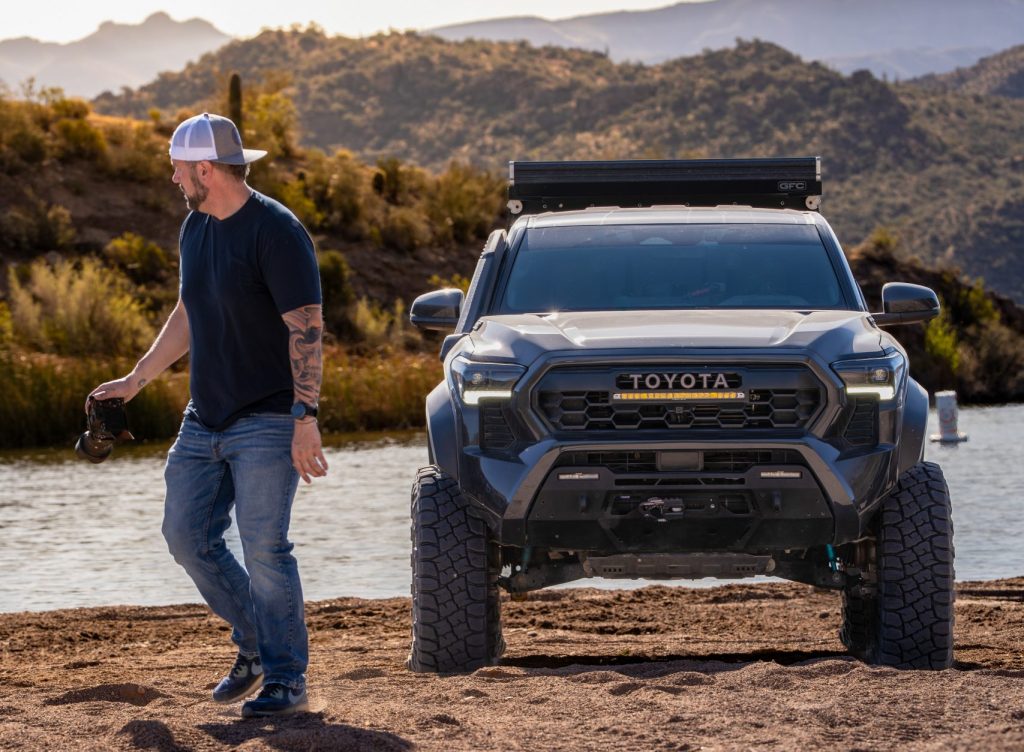
If you’ve been following the R/T tire conversation, the RT Pro is the kind of hybrid the article discusses. It sits above the RT Trail in Toyo’s lineup and just below the full Open Country M/T. It’s a rugged terrain that Toyo rates 5 out of 5 for off-road traction, same as their mud terrain, but backed by a 45,000-mile treadwear warranty that the M/T doesn’t get.
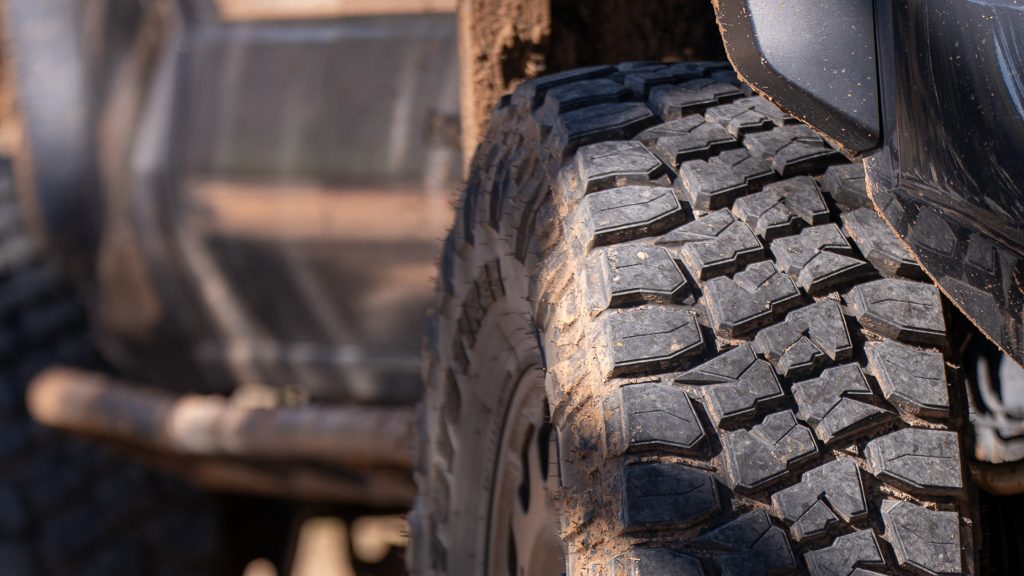
The tread pattern is noticeably more open than the AT3. Wider channels between blocks with lateral grooves cut across the face. Non-directional, so debris evacuates regardless of which way the tire is spinning. While the AT3’s tighter pattern is great for noise but packs up in mud, the RT Pro clears itself out within a few rotations, a big difference.
In the 37×12.50R17LT size I’m running: 76 lbs., 19.9/32″ tread depth, E-load rating, 3,970 lbs. max load, Q speed rating. The M/T in the same size weighs 84 lbs., that’s 8 lbs. heavier per corner and 32 lbs. more rotational mass across four tires. The M/T also carries no treadwear warranty. Toyo doesn’t warranty a tire for 45K miles unless the compound is engineered actually to reach that mileage.
Both the AT3 and RT Pro have 3-ply sidewalls in LT sizes, but the RT Pro is a different animal. Oversized shoulder lugs wrap down the sidewall for rock rash protection, and the compound is harder and more cut-resistant than what you get on the AT3. It’s the combination of shoulder construction, lug coverage, and compound working together. Not just ply count on a spec sheet.
Mounting & Balancing
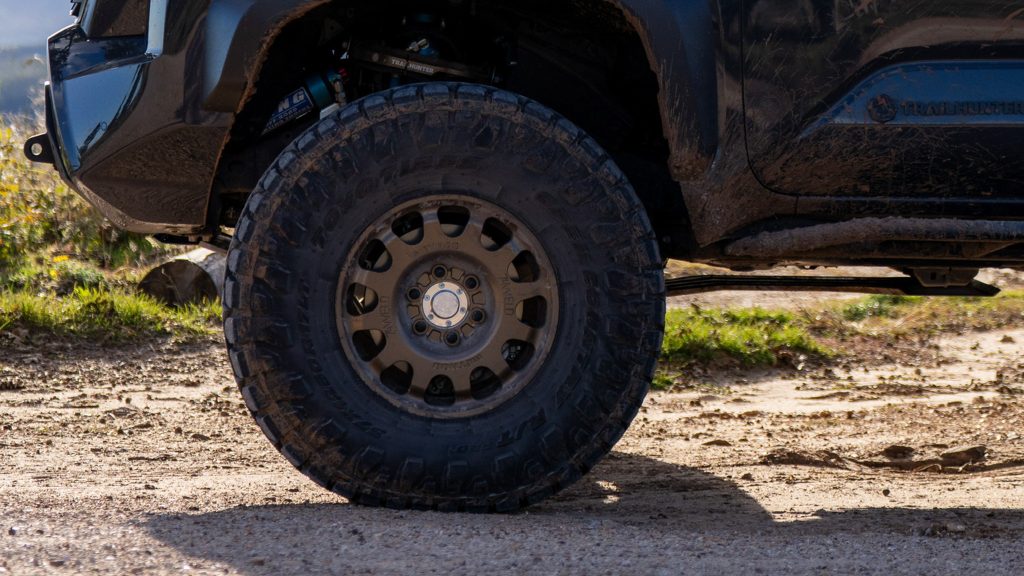
I had these mounted and balanced at a local shop that regularly handles oversized tires. If you’re going to 37s, make sure your shop has experience with E-load tires. Seating the bead on a stiff sidewall takes more pressure than a C-load AT. My shop ran them up to about 55 psi to seat the bead, then aired back down to 35 psi for the road.
Balancing was straightforward. No vibrations at highway speed, even at 80 mph on the interstate. The truck needed a quick TPMS relearn after the swap, which took about five minutes with a scan tool. Nothing complicated.
If you’re running aftermarket wheels, double-check your backspacing and confirm the tire clears your UCAs at full lock before committing to the 37″ size. On the Trailhunter with portals, clearance wasn’t an issue, but stock-axle trucks at 37s are a tighter fit depending on your lift and UCA setup. If you’re looking to learn more about 37″ tire fitment, check out – Fitting 37″ Tires On 4th Gen Tacoma.
Daily Driving & Road Manners
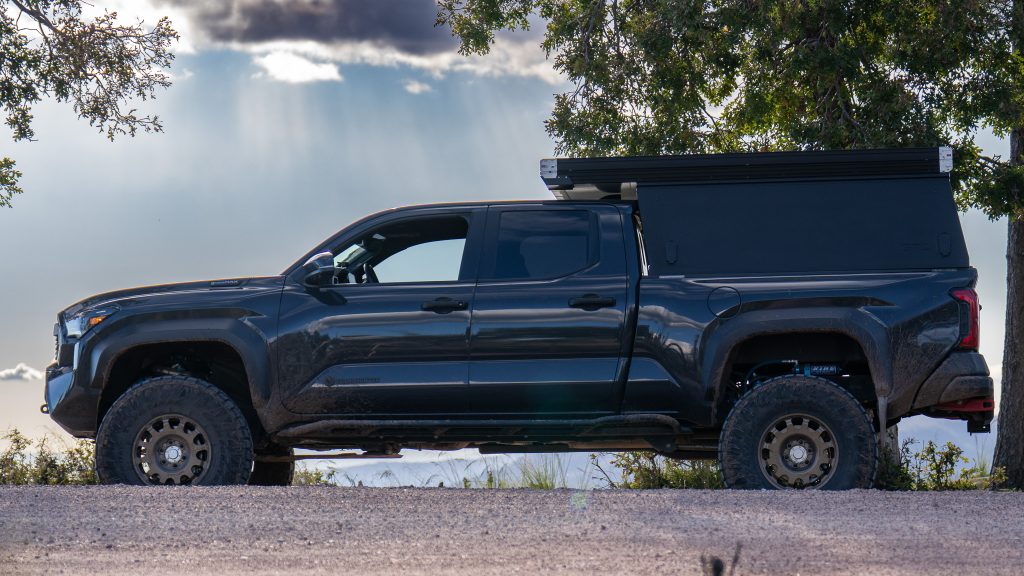
I drive this truck daily. It hauls kids, sits in traffic, pulls highway miles every week. So the on-road experience matters a lot.
Road noise went up. Not a drone, more like a low-frequency presence between 55-70 mph. Noticeably louder than the AT3s, but it’s not even in the same zip code as what a full M/T produces. Toyo uses three different block spacings across the tread face to spread the noise over a wider frequency range rather than creating a single-note hum. If you’ve spent any time riding on mud terrains, you’ll think the RT Pros are whisper-quiet by comparison.
Fuel economy dropped. I was at 13-14 mpg combined on the 35″ AT3s. With the 37″ RT Pros and portals, it settled around 11-12 mpg on the dash. Full disclosure: I swapped tires and added portals at the same time, so I can’t isolate the tire’s exact impact from the portal change. Bigger diameter, heavier E-load construction, more aggressive tread, plus the extra ground clearance from portals, creating more aero drag underneath. All of it adds up. If you’re going to 37s on stock axles without portals, expect a smaller hit.
Ride quality is stiffer but more planted. The E-load sidewall is noticeably firmer than a C-load AT at street pressures around 35-38 psi. Small road imperfections come through more. After about 500 miles, they settled in, and the truck started cornering flatter, which I actually prefer. Not harsh. Just more communicative.
Off-Road Performance
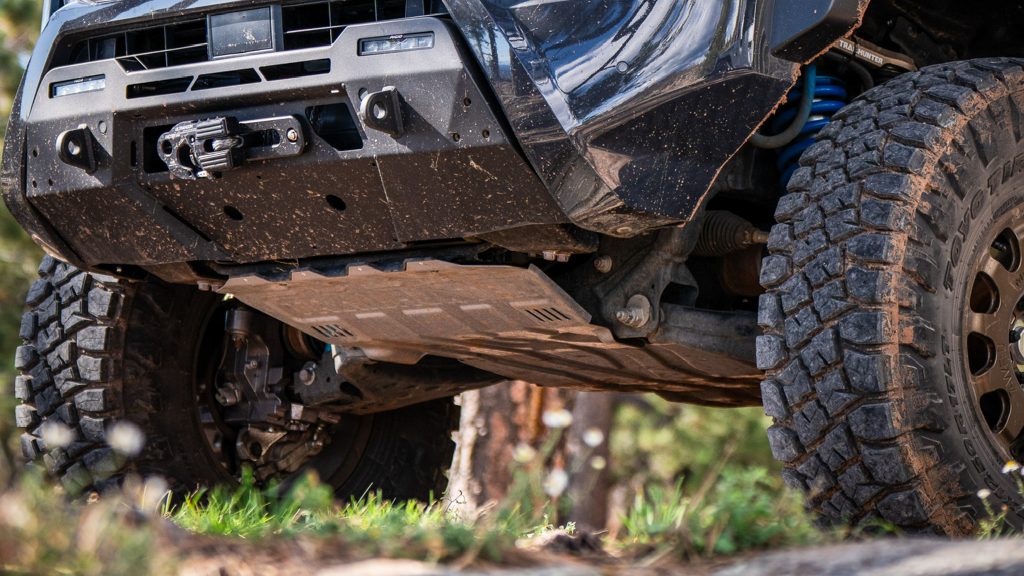
This is where the money went, and where it paid off.
First trail run on the RT Pros, aired down to 17 psi on a rocky wash, and the truck felt planted in a way it hadn’t before. The tread bit into the edges that the AT3s would have slipped over. Through a muddy section that would have packed the old tires in seconds, the RT Pros kept clearing and pulling. Toyo rates the AT3 at 4/5 for off-road traction and the RT Pro at 5/5, the same score as their M/T. Based on my actual seat time, that checks out.
The reinforced sidewall is a real trade-off, though. That construction protects against punctures, but the tire doesn’t conform and drape over rock surfaces the way a softer sidewall would at the same pressure. On 17″ wheels without beadlocks, 12 psi is about my comfort floor. It works really well at that pressure, but don’t expect the sidewall to wrap around rocks the way a C-load AT does. You get less tread contact area but dramatically more puncture resistance. Having said that, I had some pretty crazy shots from a buddy’s phone of the sidewall touching end-to-end during a boulder-garden obstacle near Table Mesa, AZ. He was impressed.
Important note for readers: I’m running 74Weld portal axles, which give significantly more ground clearance and lower wheel speeds than a stock 4th Gen Tacoma. My off-road experience is on a heavily modified setup and won’t directly translate to a stock-axle truck at the same pressures. Your mileage will vary based on your specific build.
Snow, Sand & The Missing Snowflake
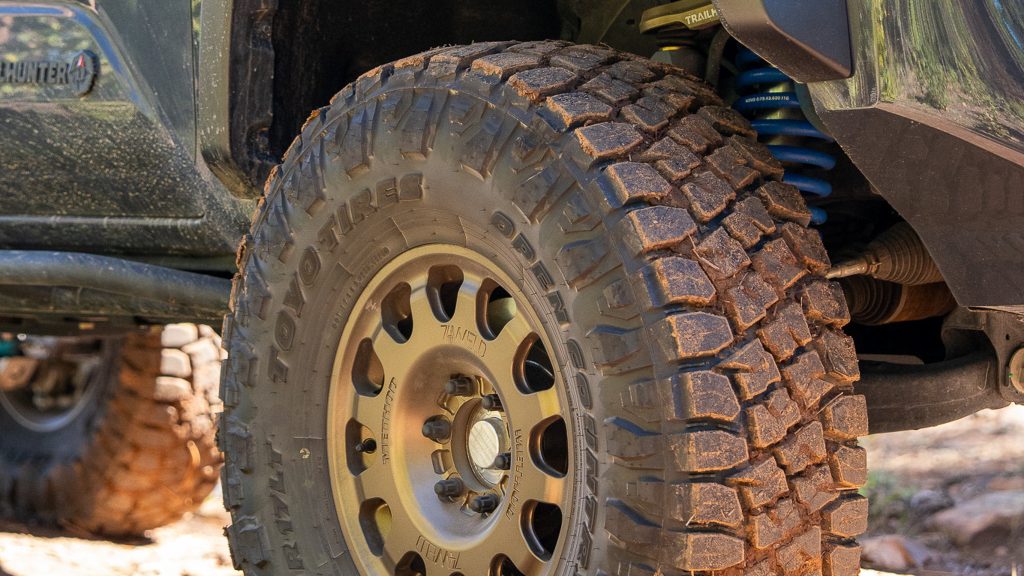
One thing you lose when going from the AT3 to the RT Pro is the 3-Peak Mountain Snowflake (3PMSF) certification. The AT3 carries it. The RT Pro does not. If you’re in a state with chain law requirements that mandate snowflake-rated tires, that matters on paper.
For context, the AT3s earned that rating with me. I drove to Montana and back in January during sub-zero temps on ice and snow to pick up a GFC V2 Pro camper. No chains, no issues. The AT3 handled everything that trip threw at it.
The RT Pro hasn’t seen those exact conditions yet, but it hasn’t been babied either. I’ve driven through snow around Flagstaff, run wet black volcanic cinders at speed, and the tire never gave me a reason to worry. The more open tread pattern actually clears slush and wet sand better than the AT3 did, which makes sense given the wider void ratio.
Deep sand at King of Hammers was a non-issue, right up until I got stuck at the top of a dune and needed a winch out. That was me, not the tire. Toyota’s traction control was cutting power every time the wheels started to spin, which is exactly what you don’t want in deep sand. Lesson learned on disabling the nanny before hitting the dunes.
Durability & Construction
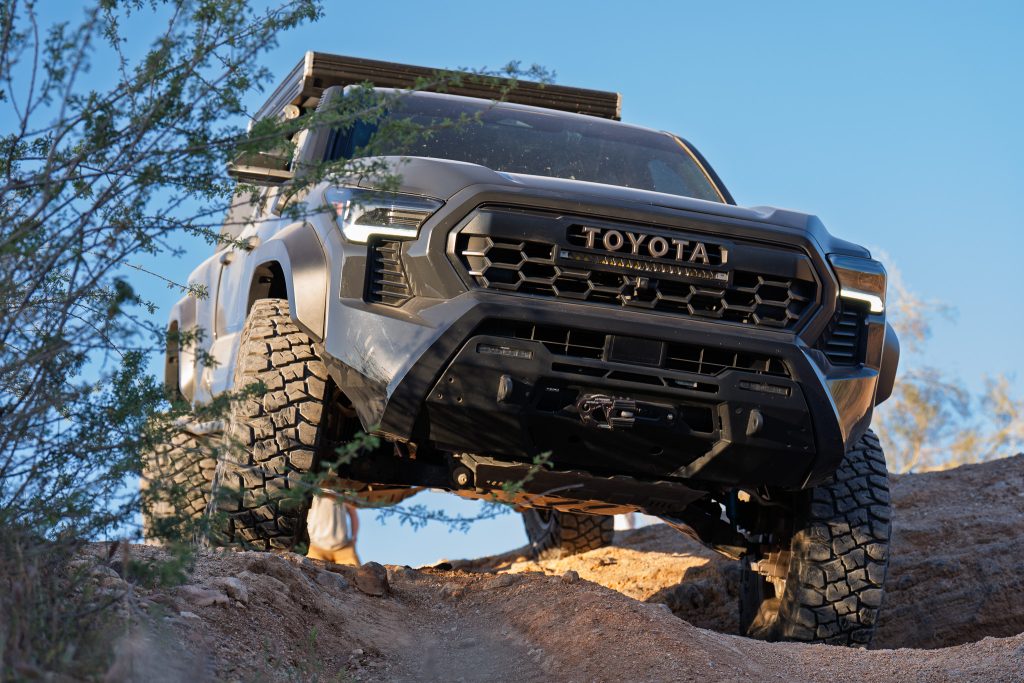
After multiple trail days on sharp volcanic rock and jagged granite, the sidewalls show surface scuffs but zero cuts that concern me. On the AT3s, I was always picking careful lines around sharp edges and still worrying about a sidewall gash. With the RT Pro, I still pick my lines, but the anxiety about a catastrophic sidewall failure is genuinely reduced. That peace of mind is worth something.
Tread wear has been even and slow across all four tires. Starting at ~20/32″ depth with Toyo backing it with that 45K-mile warranty, these have a long service life ahead of them. The stone ejectors between the tread blocks actually work, too. I’m not spending 20 minutes after trail runs picking embedded rocks out of the tread, as I did with some other tires I’ve run in the past.
Final Thoughts
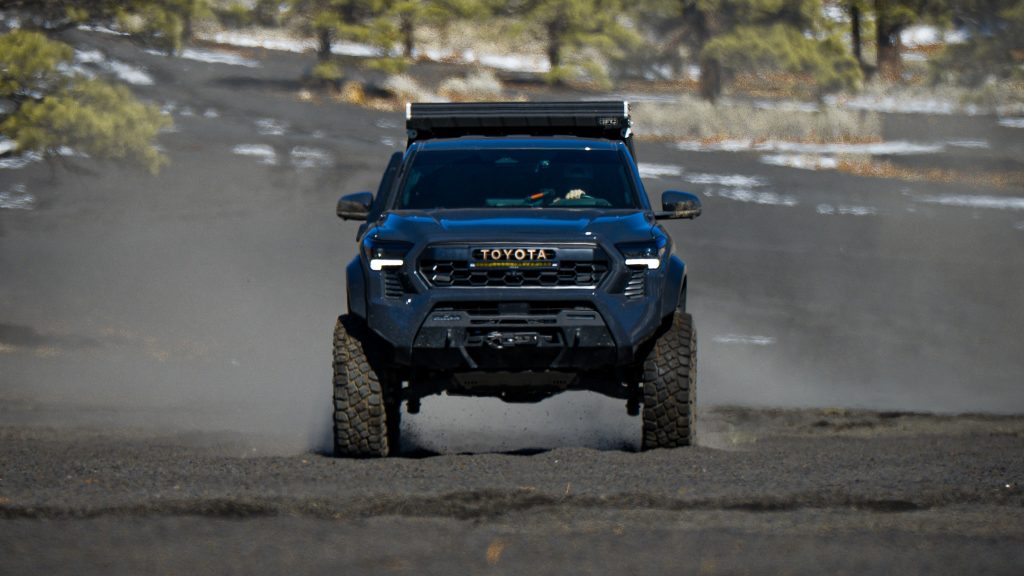
The RT Pro fills a gap that many 4th Gen owners are looking for right now. You want more off-road capability than an AT can deliver, but you don’t want the noise, weight, and tread-life penalty of a full mud-terrain tire on a truck you drive to work every morning.
Pros
- Off-road traction on rock, gravel, and mixed terrain is outstanding
- Reinforced 3-ply sidewall with real puncture protection for sharp rock
- 45,000-mile treadwear warranty — the M/T doesn’t get one
- ~20/32″ tread depth means serious service life
- Self-cleaning tread pattern that actually evacuates debris
- 8 lbs. lighter per corner than the M/T in the same size
Cons
- Road noise is noticeable at highway speed, manageable, but louder than an AT.
- No 3PMSF snowflake certification
- E-load sidewall stiffness limits tread conformity when aired down on rock
- Premium pricing at ~$460-500/each
At roughly $475 per tire, you’re in premium territory. But you’re getting a proven manufacturer with decades in the off-road space, reinforced sidewall construction built for sharp rock, and a treadwear warranty backing the compound. For a truck that commutes on Monday and crawls a rock shelf on Saturday, this tire sits in exactly the right spot.