As some of you may know, Toyota used a 2.4L engine in the 1st Gen Tacoma, producing 142 horsepower and 160 ft/lbs. of torque. Now in 2024, Toyota has returned to a 2.4L platform but with one major difference… turbocharging. Over the past several years, Toyota has been shifting away from naturally aspirated V6 and V8 engines in favor of smaller, more fuel-efficient turbocharged powerplants.
While many drivers are already praising the 4th Gen Tacoma for its upgraded interior and improved on- and off-road performance, it still has to prove itself in the longevity department, something Toyota has long been known for. With no naturally aspirated engine option available, some enthusiasts are concerned about how this new turbocharged platform will perform at high mileage. Although some drivers are already approaching/over 100,000 miles without reported issues, it’s still too early to make definitive claims about long-term durability. But when that first 250k miles happens, it’s game on!
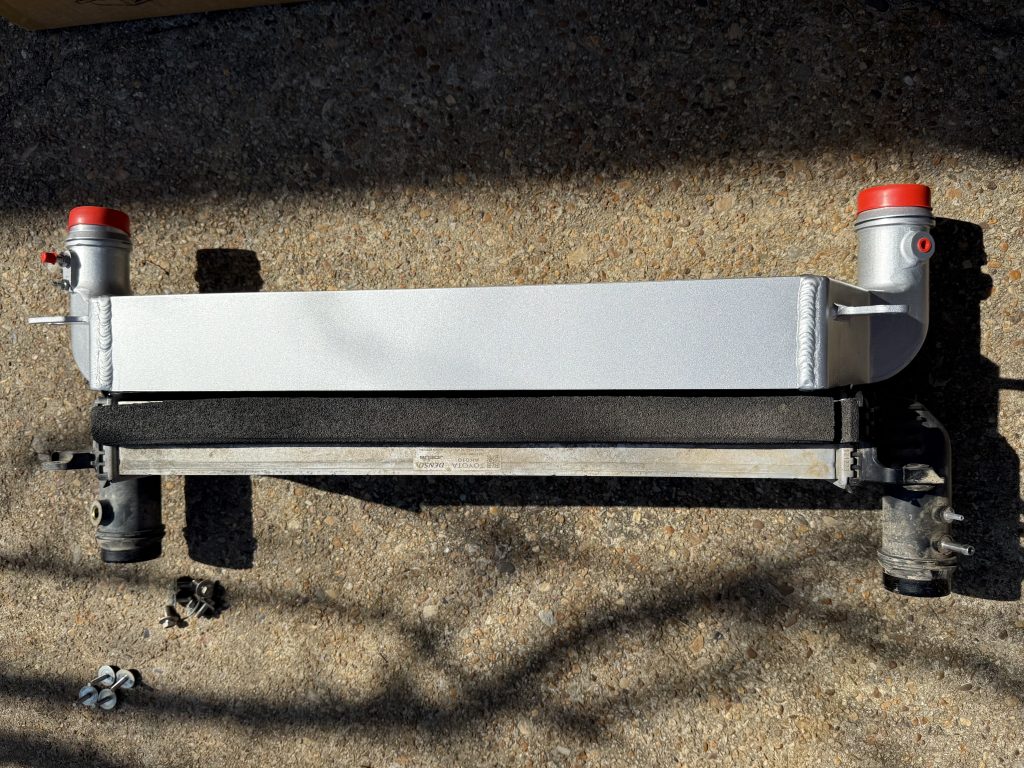
To help address some of these concerns, and to improve overall performance, SXTH Element Engineering has developed a front-mount intercooler specifically for this new turbocharged engine. With a redesigned core and improved airflow characteristics, this upgrade promises better cooling efficiency and more consistent performance over the factory intercooler. Let’s take a closer look at how this component works and why it matters.
You can find SXTH Element’s installation resources below…
Table Of Contents
YouTube Video
Check out Konrad’s review and overview!
Relationship Between Turbos & Intercoolers
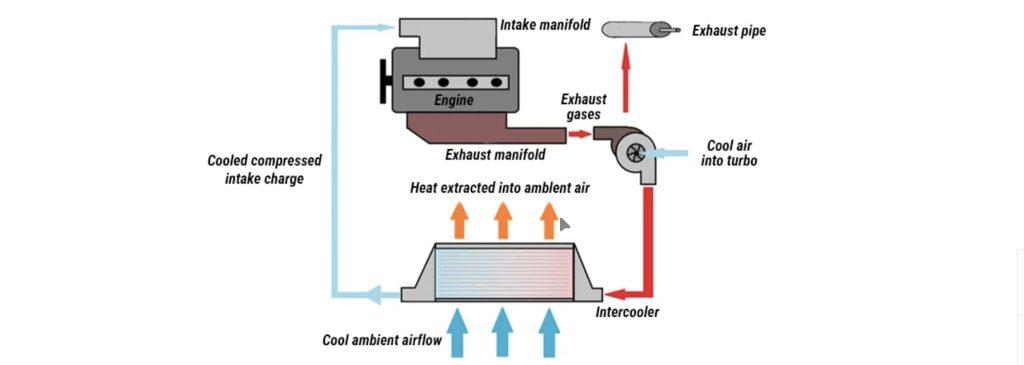
If you’ve never owned a turbocharged vehicle, you might be wondering, “What does an intercooler have to do with a turbocharger?” That’s an important question when considering performance upgrades.
There are two common types of forced induction systems: turbochargers and superchargers. Both increase engine power by forcing more air into the cylinders. More air allows more fuel to be burned during combustion, increasing cylinder pressure and ultimately producing more power.
A turbocharger uses exhaust gases to spin a turbine wheel. A shaft connects that turbine to a compressor wheel, which draws in and compresses fresh air. However, compressing air increases its temperature, and hot air is less dense. This is where the intercooler becomes essential.
The intercooler cools the compressed air before it enters the intake manifold. Cooler air is denser, meaning it contains more oxygen per volume. This improves combustion efficiency, reduces the likelihood of knock, and helps the engine maintain consistent power, especially under sustained boost.
While the intercooler may not be the “heart” of the turbo system, it plays a critical supporting role in maintaining performance, reliability, and thermal stability.
How Does This Improve Truck Performance?
Turbochargers have been around for over a century, first patented in 1905. Over time, they’ve become more efficient and durable, but one constant challenge has remained – heat management.
When a turbo compresses air, intake temperatures rise significantly. If that heat isn’t managed properly, performance can drop due to heat soak, especially during towing, off-roading, or repeated hard acceleration.
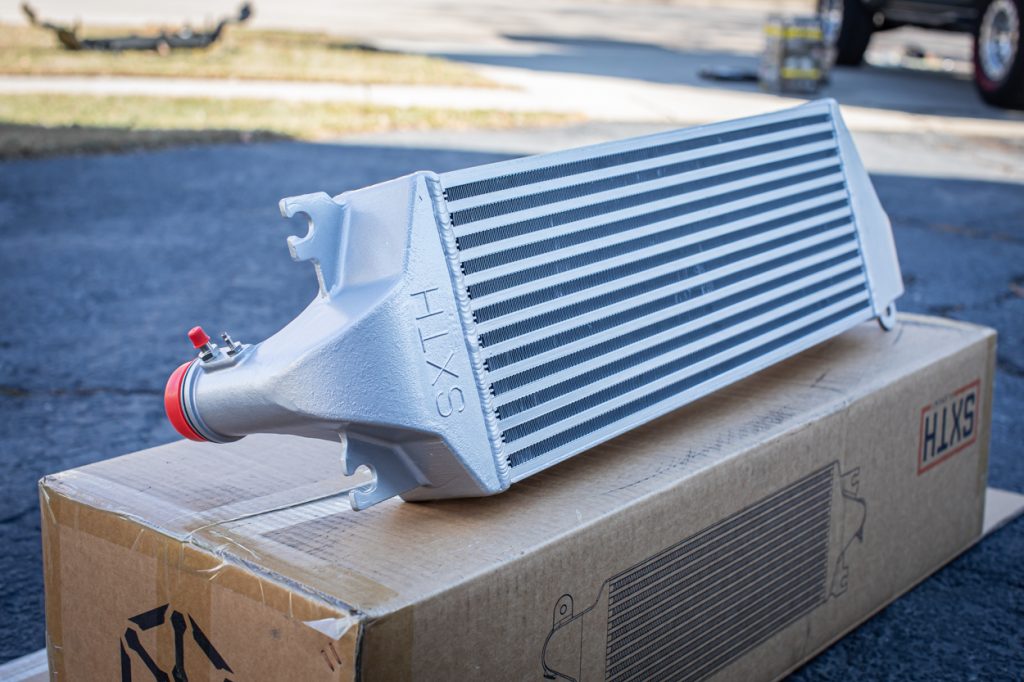
SXTH Element’s front-mount intercooler addresses this issue with a bar-and-plate aluminum core and cast aluminum end tanks designed to promote smooth airflow and structural strength. Compared to the stock unit, this intercooler increases internal volume by approximately 16%, adding 11mm in height and 16mm in thickness.
The performance data reflects these improvements…
- Stock intercooler pressure drop: 2.4 PSI
- SXTH intercooler pressure drop: 1.2 PSI
- Reduced turbo outlet temperatures by 48°F
- Reduced post-intercooler temperatures by 14°F
A lower pressure drop means the turbo does not have to work as hard to achieve the same boost levels, which can improve efficiency and reduce strain. Lower intake temperatures also help maintain consistent power under load.
Build Quality & Design
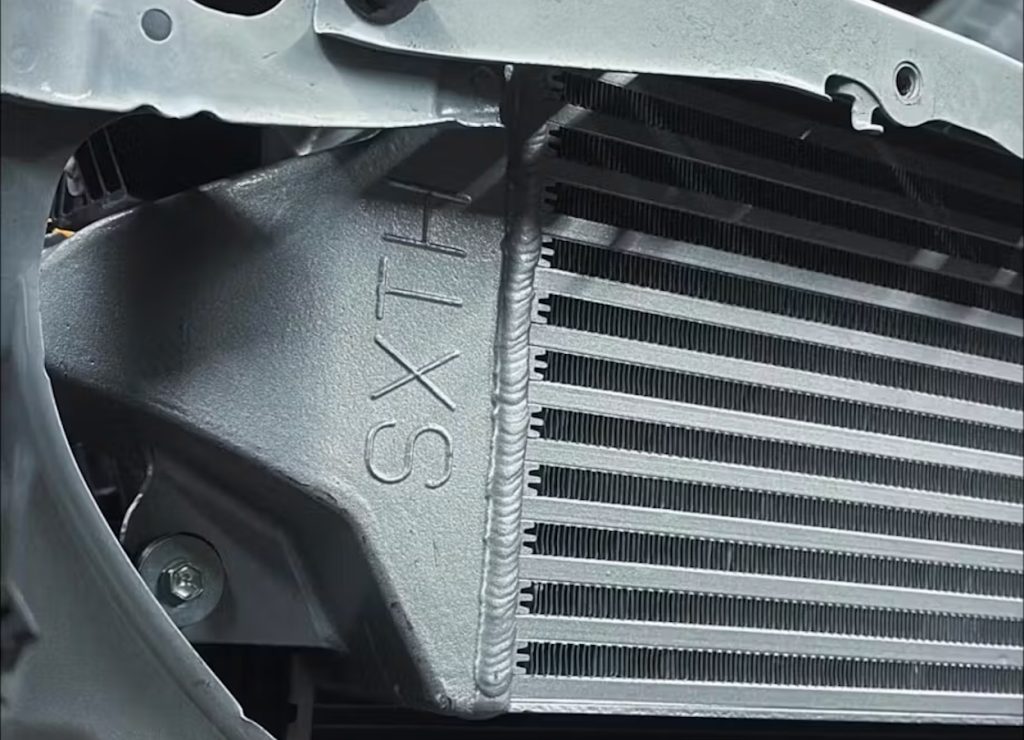
SXTH Element is known not only for performance gains but also for high-quality manufacturing. This intercooler features a bar-and-plate aluminum core paired with cast aluminum end tanks designed to reduce airflow restriction compared to the factory unit. The end tanks are CNC-machined for precise hose fitment and durability.
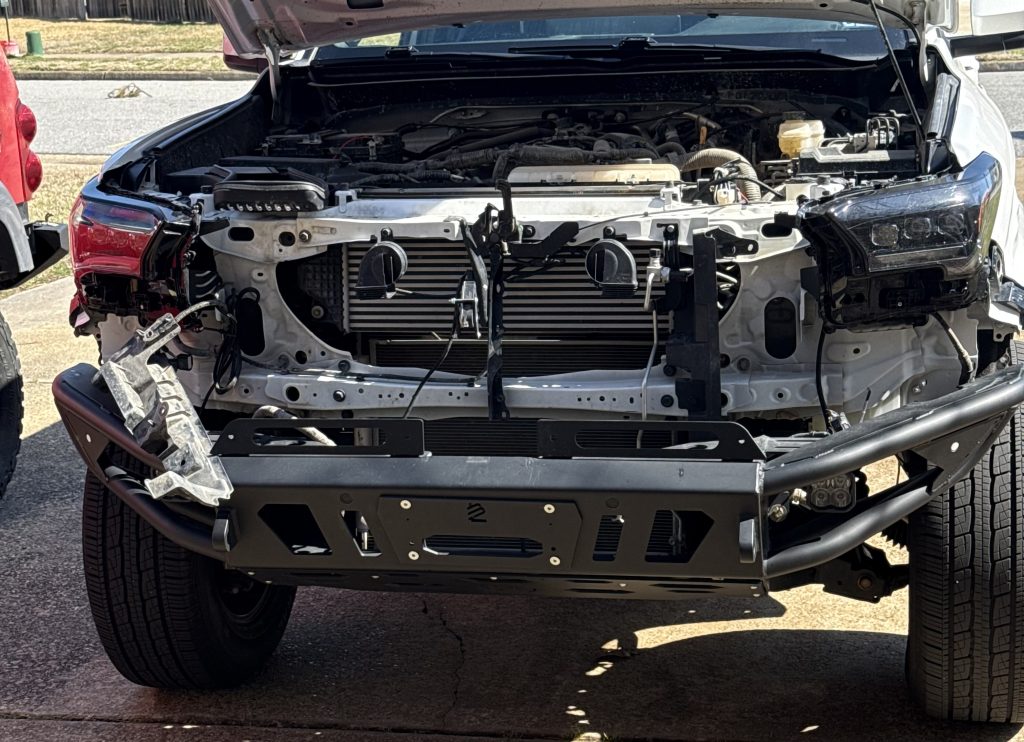
Each unit is pressure tested at twice the factory boost level to ensure reliability under demanding conditions. Despite its larger size, the SXTH intercooler remains compatible with factory sensors and grille shutters, preserving OEM functionality.
Finished in a corrosion-resistant silver coating that aids heat dissipation, the intercooler blends cleanly behind the grille while offering noticeable durability improvements over stock. I’ve also paired the intercooler with a SXTH air intake, to help the system breathe even easier. Bonus improvement in audible intake/turbo sounds.
Pros & Cons
PROS
- Increased horsepower and torque (due to improved charge-air cooling)
- Lower intake air temperatures
- Reduced pressure drop
- Potential reduction in turbo strain
- Retains factory sensors and grille shutters
- High-quality construction and durability
CONS
- Installation can be complex and time-consuming
- Not currently CARB certified (check your state regulations)
- May impact factory warranty
Who Is This Made For?
This intercooler is ideal for 4th Gen Tacoma owners who want to take their truck to the next level. Whether you’re planning performance tunes, considering larger turbo upgrades, or want more consistent performance, an upgraded intercooler becomes increasingly important.
It’s also a smart upgrade for drivers concerned about heat management and long-term reliability. By improving cooling efficiency and reducing strain under boost, this modification may provide added peace of mind.
For Tacoma owners who tow frequently or drive in mountainous terrain, this upgrade can be especially beneficial. Under heavy load or steep inclines, the turbo works harder, and that’s when improved charge-air cooling makes the biggest difference.
Final Thoughts
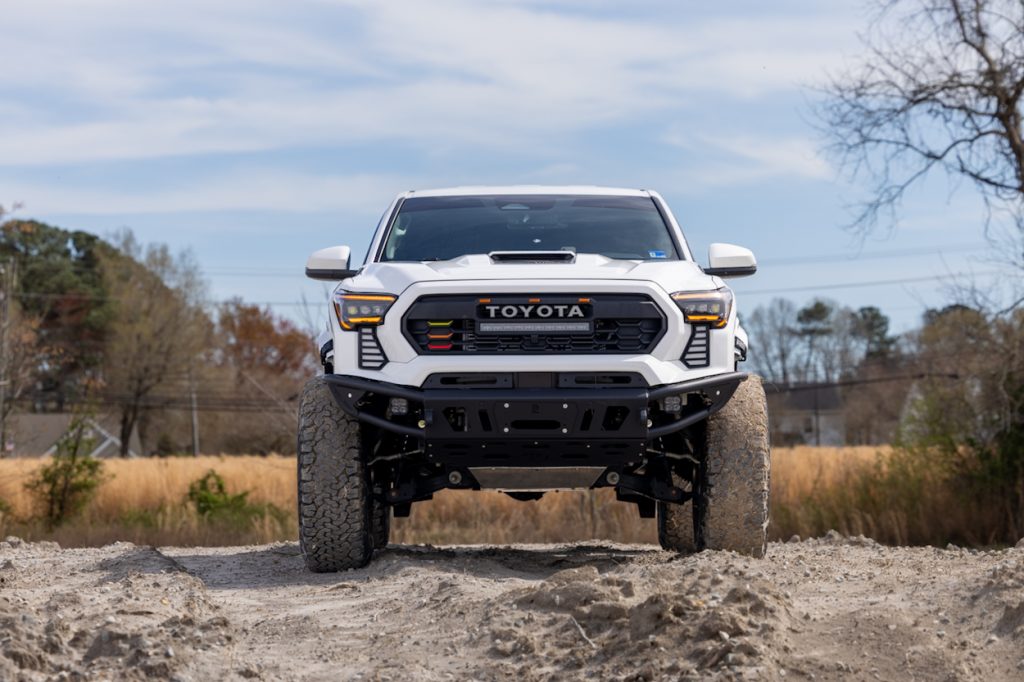
At the end of the day, this upgrade addresses both performance and protection. You gain more consistent power while also improving the engine’s ability to manage heat under boost.
Although installation requires time and the proper tools, the improvements in cooling efficiency, pressure drop, and overall build quality make it a worthwhile investment for many owners.
This intercooler isn’t just a performance upgrade, it’s a supporting modification that helps your turbocharged Tacoma perform consistently and confidently under demanding conditions.